- English
- Español
- Português
- русский
- Français
- 日本語
- Deutsch
- tiếng Việt
- Italiano
- Nederlands
- ภาษาไทย
- Polski
- 한국어
- Svenska
- magyar
- Malay
- বাংলা ভাষার
- Dansk
- Suomi
- हिन्दी
- Pilipino
- Türkçe
- Gaeilge
- العربية
- Indonesia
- Norsk
- تمل
- český
- ελληνικά
- український
- Javanese
- فارسی
- தமிழ்
- తెలుగు
- नेपाली
- Burmese
- български
- ລາວ
- Latine
- Қазақша
- Euskal
- Azərbaycan
- Slovenský jazyk
- Македонски
- Lietuvos
- Eesti Keel
- Română
- Slovenski
- मराठी
- Srpski језик

Xinjiang's First High-Altitude Mine PV Project Goes Live: Heishan Coal Mine Blazes Trail for Green Transition with "Mining Governance + Power Generation"
2025-12-22
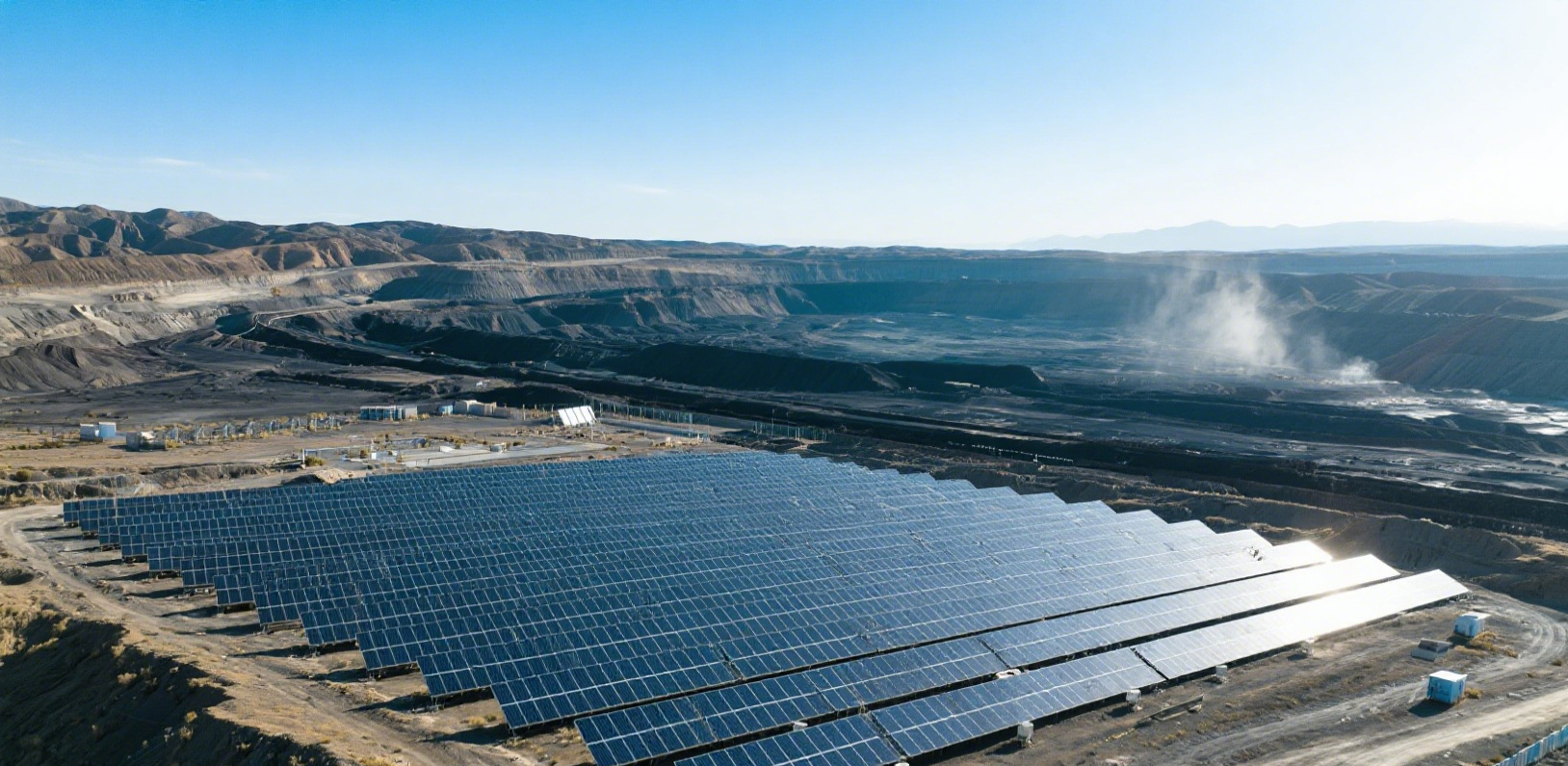
Turpan, December 5 (Reporters Xiao Bin, Wang Yawei) – Today, the 20MWp (megawatt-peak) captive photovoltaic (PV) power project of Guodian Xinjiang Energy Heishan Open-Pit Coal Mine was successfully connected to the grid, marking the official commissioning of Xinjiang's first comprehensive management distributed PV project built on high-altitude mining dump sites (waste rock disposal areas). The completion of this project not only revitalizes idle land resources in the mining area but also creates a new collaborative development model of "ecological governance + clean energy production" for high-altitude mining areas, injecting new impetus into the green transition of mining areas in Xinjiang and across China.
It is understood that the project is located in Heishan Mining Area, Tuokexun County, Turpan City, Xinjiang, with a site altitude of 2,690 meters. It is planned and constructed based on the mine's closed dump sites, covering a total area of approximately 652.07 mu (about 43.47 hectares; 1 hectare = 10,000 square meters). Adopting a distributed layout, the project is divided into three PV units including a 5.99MW (megawatt) unit at the coal preparation plant, with a total AC (alternating current) installed capacity of 15.682MW. It is also equipped with a 6MWh (megawatt-hour) lithium iron phosphate (LFP) electrochemical energy storage system and operates in a "self-generation and self-consumption" mode. The generated electricity directly meets the production and living power needs of the mining area, realizing the local consumption of clean electricity.
"High altitude, frequent strong winds, and complex geological conditions are the three core challenges faced during the project construction," said the project director. To ensure project quality and construction safety, the project team strictly implemented Guodian Group's engineering construction requirements of "two no-excesses and three zeros". Through multiple on-site surveys to optimize the construction plan, the team innovatively adopted technical measures such as column cap test pile reinforcement and additional weights on PV panels, providing double guarantees for the stability of equipment structures under strong wind conditions. These efforts successfully overcame technical difficulties such as low construction efficiency in high-altitude areas and difficult foundation construction in complex geological conditions, ensuring the project was connected to the grid at full capacity ahead of schedule.
In terms of ecological and economic benefits, the project has achieved remarkable results since its commissioning. Data shows that after full-capacity operation, the project is expected to transmit approximately 30 million kWh of clean electricity annually, saving about 10,000 tons of standard coal and reducing carbon dioxide emissions by around 24,000 tons each year. It will also reduce emissions of pollutants such as sulfur dioxide and nitrogen oxides, effectively improving the ecological environment of the mining area and its surrounding areas. In terms of land use, the project fully utilizes the originally idle dump sites, realizing the resource reuse of abandoned land and solving the dilemma of tight land resources in the mining area's transition and development.
A relevant person in charge of Guodian Xinjiang Energy stated that the Heishan Mining Area PV project is an important practice for the group to promote energy structure optimization and help achieve the "dual carbon" goals (China's national strategy to peak carbon dioxide emissions before 2030 and achieve carbon neutrality before 2060). Moving forward, the company will take this project as a benchmark, continue to explore green transition paths for mining areas, improve the project's intelligent operation and maintenance (O&M) level through big data and artificial intelligence technologies, and summarize the construction and operation experience of high-altitude mining area PV projects to provide a replicable plan for more similar projects.
Industry experts pointed out that Xinjiang is an important energy base and mineral resource-rich area in China, with extensive distribution of high-altitude and strong wind mining areas. The successful grid connection of the Heishan Coal Mine PV project not only verifies the feasibility of PV project construction in complex high-altitude environments but also provides a new "mining governance + power generation" idea for mining area transition. With the gradual promotion of such projects, it will effectively drive the transformation of the energy structure of Xinjiang's mining areas towards cleanliness and low carbon, helping to comprehensively