English
 Español
 Deutsch
 Français
 عربي
عربي
Automatic Transfer Switching Equipment: Working Principle, Types, Applications, and Selection Guide
- Introduction
In power supply systems, continuity of service is a critical indicator of power quality. For certain critical loads, power interruptions can lead not only to economic losses but also to safety incidents or disruptions in public order. To ensure a stable power supply for such loads when the normal power source fails, Automatic Transfer Switching Equipment (ATSE) is widely used in low-voltage distribution systems. This article provides a systematic introduction to ATSE from four aspects: working principle, product classification, typical applications, and selection principles.
- Working Principle
ATSE is a switching device designed to monitor the status of two power sources and automatically transfer the load from the normal source to an alternative source when the normal source becomes abnormal. Its core working mechanism is as follows:
Power Status Monitoring: The controller continuously collects electrical parameters such as voltage and frequency from the normal power source (typically the utility grid) and compares them against preset thresholds.
Fault Determination: When abnormalities such as undervoltage, overvoltage, phase loss, or frequency deviation occur on the normal source, and these abnormalities persist beyond the set delay time, the controller determines that the normal source has failed.
Transfer Command Execution: The controller sends a command to the switching mechanism, activating an electromagnet or motor operator.
Mechanical Transfer: Under both electrical and mechanical interlocking, the switching mechanism first disconnects the normal source. After a brief dwell time (typically from milliseconds to seconds), it closes the contacts on the alternative source, completing the load transfer.
Automatic Reset: If the "automatic transfer with automatic return" mode is selected, once the normal source is restored and remains stable for a specified period, the ATSE automatically transfers the load back to the normal source and returns the alternative source to standby mode.
The entire switching sequence is precisely managed by the controller, which also prevents nuisance operations caused by transient power fluctuations.
III. Main Types
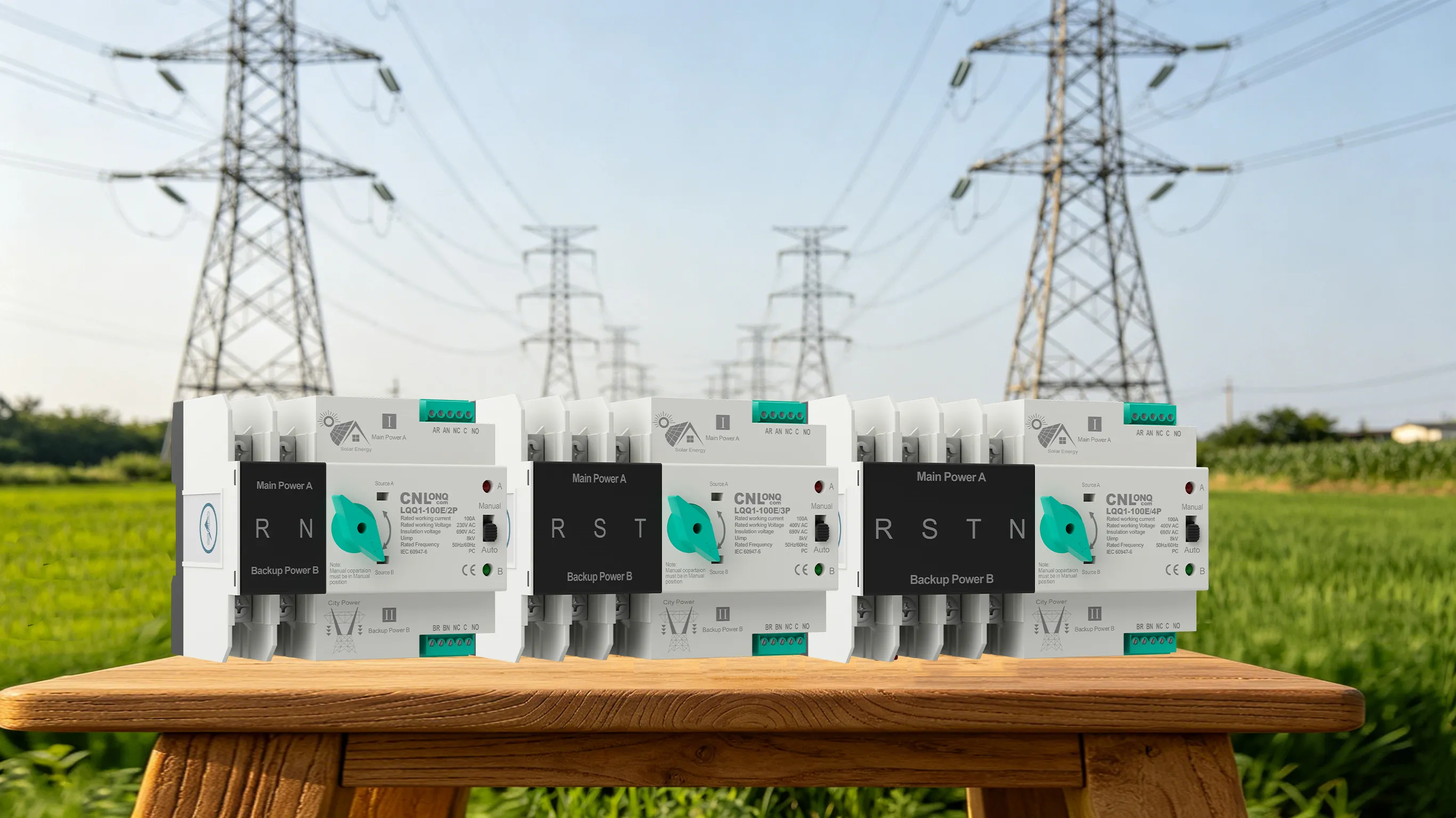
Depending on the structure and protective functions, ATSE is mainly divided into the following two categories:
- PC-level ATSE
Structural Characteristics: Designed with a disconnector (isolator) or a dedicated transfer mechanism. It does not integrate overcurrent or short-circuit protection elements.
Core Function: Solely responsible for power source transfer; does not provide load-side protection.
Operational Logic: Prioritizes continuity of supply. Even if a fault occurs on the load side, the PC-level ATSE strives to remain closed to maintain power to critical equipment.
Typical Applications: Fire protection loads (e.g., fire pumps, smoke exhaust fans), data centers, hospital operating rooms, and other places where power interruption is not permitted.
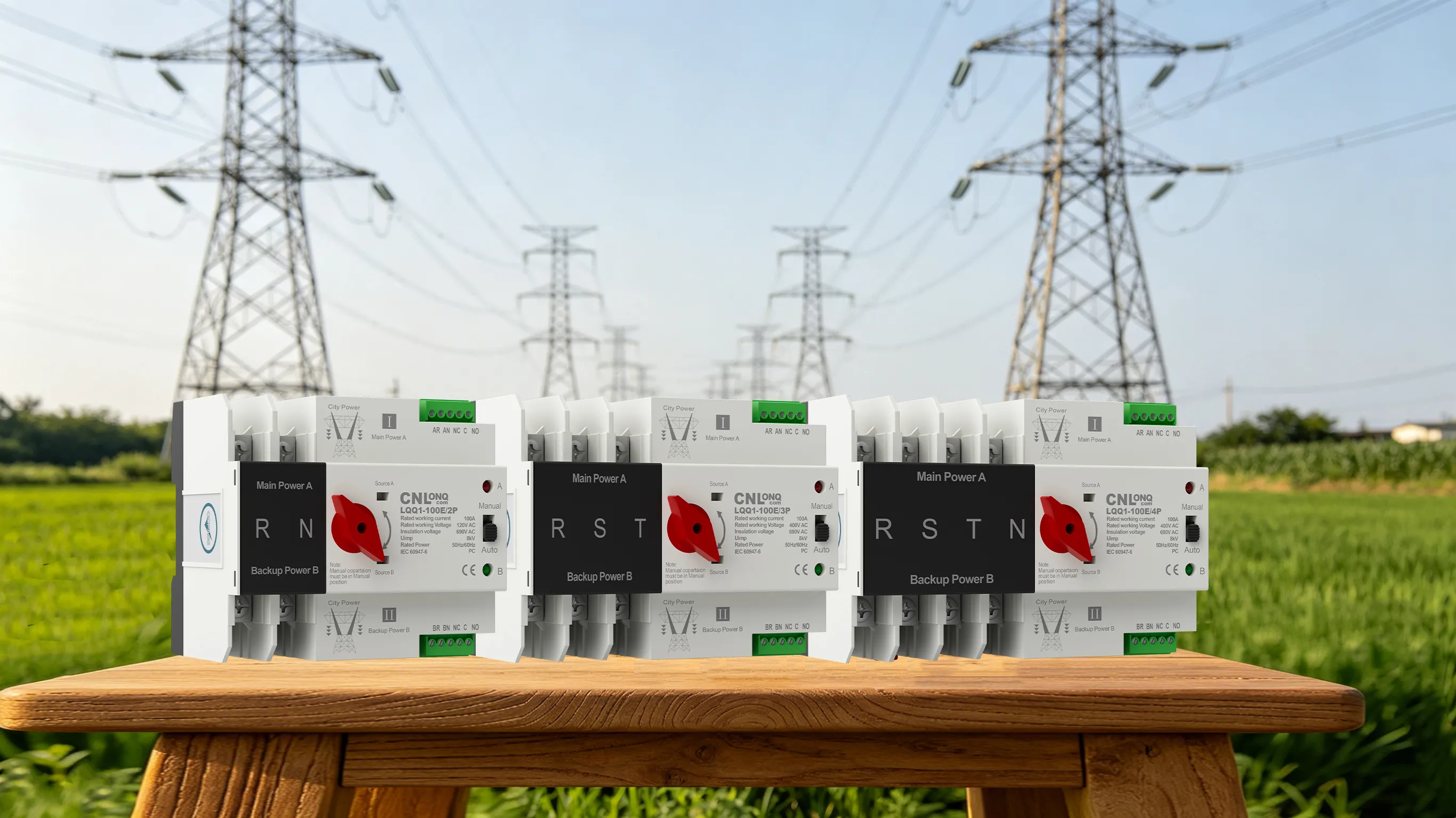
- CB-level ATSE
Structural Characteristics: Composed of two circuit breakers (molded case circuit breakers or miniature circuit breakers) and a transfer mechanism. Each circuit breaker provides both overload and short-circuit protection.
Core Function: Provides overcurrent and short-circuit protection to the load circuits while also enabling power source transfer.
Operational Logic: In the event of a fault, the circuit breaker will trip and disconnect the circuit. Therefore, the continuity of supply is relatively lower than that of PC-level ATSE.
Typical Applications: General lighting, ordinary air conditioners, small distribution boxes, and other locations requiring dual-source backup but allowing brief power interruptions.
Additionally, for electronic loads with extremely high requirements for transfer time (such as servers and precision instruments), a Static Transfer Switch (STS) can be used. STS is based on power electronic devices and can achieve switching times well below the transfer times of electromechanical ATSEs.
- Typical Application Scenarios
ATSE is primarily used to serve Level 1 and Level 2 loads as defined in electrical design codes—that is, equipment whose power interruption would have serious consequences. Typical applications include:
Healthcare Systems: Power supply circuits for operating rooms, intensive care units (ICUs), life support equipment, and medical IT systems.
Transportation Hubs: Airport navigation lighting, railway signaling systems, subway station ventilation and lighting, and elevators in high-rise buildings.
Security and Fire Protection Systems: Fire pumps, smoke exhaust fans, automatic fire alarm systems, emergency lighting, and evacuation signage.
Information and Communication Facilities: Data centers, telecommunications base stations, and equipment rooms for financial settlement systems.
Industrial and Public Facilities: Semiconductor production lines, large shopping malls, star-rated hotels, and bank vaults.
- Selection Guide
Selecting the correct ATSE requires comprehensive consideration of the load level, system parameters, control logic, and applicable standards. The following steps are recommended:
- Determine the ATSE Level (PC or CB)
For fire protection loads: A PC-level ATSE must be selected. This is because fire protection equipment (e.g., pumps, fans) must continue running even under overload or short-circuit conditions; power disconnection due to protective device operation is not allowed.
For general loads: Selection can be flexible based on the requirement for continuity of supply. If high continuity is required, PC-level is preferred; if general continuity is acceptable and simplified protection is desired, CB-level may be selected.
- Determine the Rated Current and Voltage
Based on the total calculated load current, select the rated operational current (Ie) of the ATSE with a margin of 1.1 to 1.25 times the calculated value.
The rated insulation voltage and rated impulse withstand voltage shall match the system voltage class (typically AC400V/230V, 50Hz).
- Determine the Number of Poles
Select either 3P or 4P according to the earthing arrangement of the low-voltage distribution system and the circuit protection requirements.
Typically, in TN-C-S or TN-S systems where the neutral conductor differs between the two power sources, a 4P switch should be used to avoid electromagnetic interference or protective device misoperation caused by neutral current division.
- Select the Controller Functional Modes
Transfer Delay: If the alternative source is a diesel generator set, an appropriate delay (e.g., 0 to 3 seconds) shall be set to allow time for the generator to build up voltage.
Transfer Modes:
Automatic transfer with automatic return: The load is automatically returned to the normal source after the normal source is restored.
Automatic transfer with non-automatic return: The load is not automatically returned to the normal source after it is restored; manual reset is required.
Mutual standby: Neither source is designated as primary; the ATSE automatically transfers to the other source if the currently active source fails.
Conclusion
As a core component for ensuring continuity of supply to critical loads, ATSE’s reliable operation is directly related to personal safety, equipment performance, and public order. A correct understanding of the essential differences between PC-level and CB-level ATSE, along with proper selection of the number of poles, current ratings, and control modes—while strictly adhering to relevant standards and certifications—is critical for building a highly reliable low-voltage distribution system. For general users, while it is not necessary to master every technical detail, a basic understanding of the main types and selection logic helps in making more accurate requests when communicating with professional electricians or system designers.