English
 Español
 Deutsch
 Français
 عربي
عربي
How to Choose the Right PV Combiner Box for Your Residential Solar System
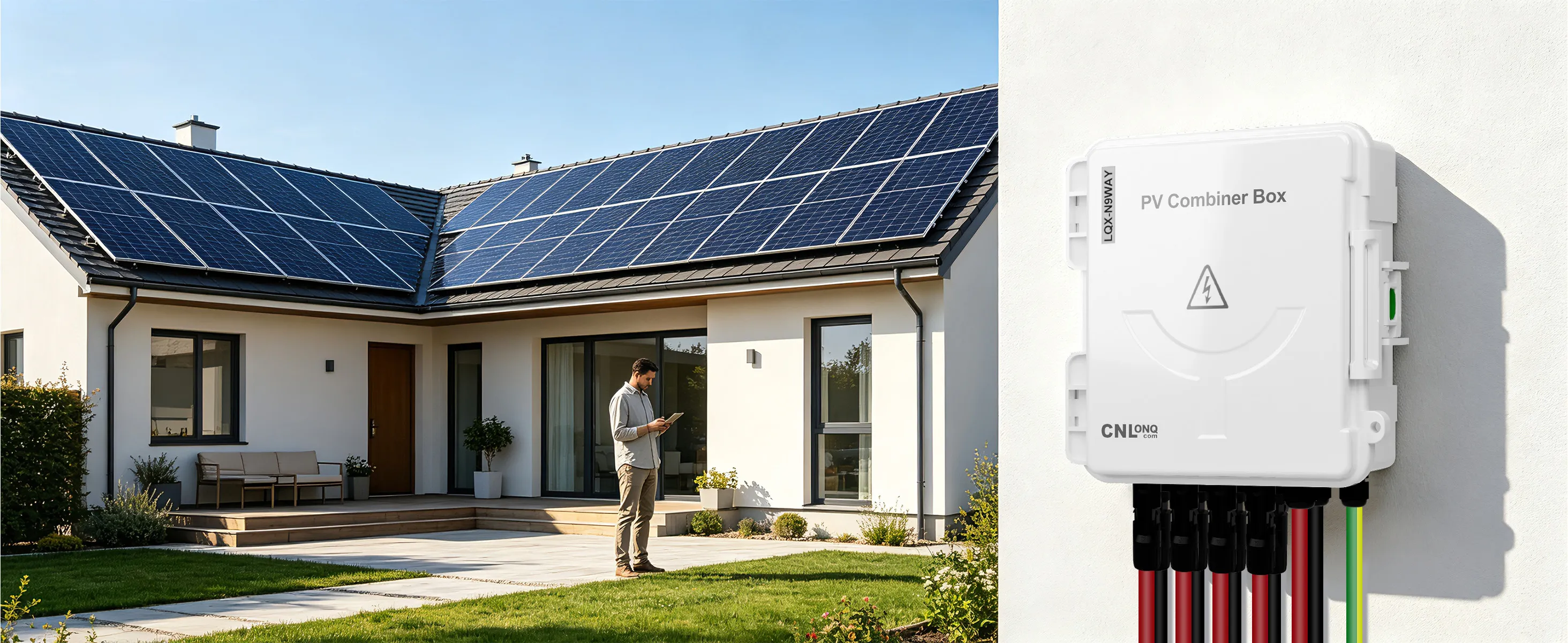
When designing a residential solar power system, homeowners typically focus on solar panels and inverters, while the PV combiner box — a critical DC-side component — is often overlooked. The right combiner box directly impacts system reliability, equipment protection, and maintenance safety. This guide covers everything you need to know about selecting a combiner box for your home solar array.
1. What Does a PV Combiner Box Do in a Solar System?
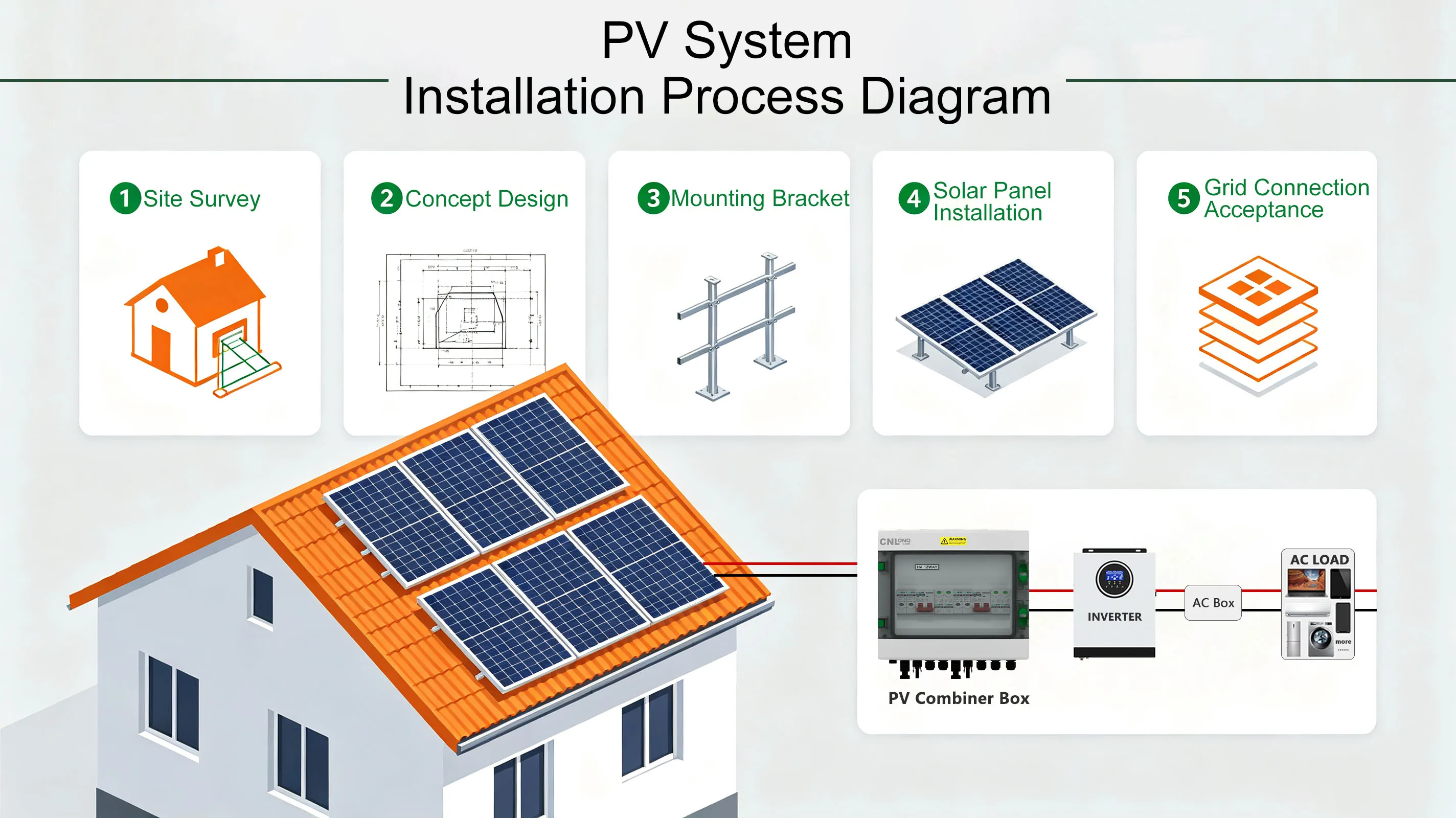
A PV combiner box is the central integration unit on the DC side of a solar installation. DC power generated by the solar panels first enters the combiner box, then flows to the inverter. Its key functions include:
Circuit Consolidation — Aggregates multiple panel strings into a single output, simplifying wiring and making the system layout clean and organized.
String-Level Protection — Each input string has independent protection. If one string develops a fault, it can be isolated without shutting down the entire system.
Surge Protection — A built-in surge protective device (SPD) diverts transient voltage from lightning strikes, shielding the inverter and other expensive equipment from damage.
Maintenance Safety — An integrated DC disconnect switch physically isolates the DC circuit during inspection or repair, protecting service personnel.
For multi-string residential systems, a PV combiner box is not an optional accessory — it is an essential safety and reliability component.
2. Four Key Factors in Selecting a Residential PV Combiner Box
Factor 1: Environmental Rating — Built for Outdoor Use
Most residential combiner boxes are mounted on rooftops or exterior walls, exposed to sunlight, rain, and temperature swings.
- Choose an outdoor-rated enclosure (IP65/IP66) with waterproof, dustproof, and UV-resistant properties;
- PC ABS engineering plastic or cold-rolled steel enclosures offer a good balance of lightweight construction and structural strength;
- Look for UL94 V-0 flame-retardant material rating to reduce fire risk at the material level;
- Never use an indoor-rated enclosure outdoors — it will degrade rapidly and shorten equipment life.
Factor 2: Surge Protection — Essential in Lightning-Prone Areas
Induced lightning surges are one of the leading causes of inverter failure. Inverter replacement is costly.
- Prioritize combiner boxes with a built-in SPD;
- Factory-integrated SPDs offer cleaner wiring and higher reliability than field-added units;
- Quality SPD modules withstand multiple surge events and can be replaced individually when depleted.
Factor 3: Electrical Specifications — Match Your System Exactly
Select based on your array's actual parameters, not just enclosure size:
- Number of inputs: Match the number of panel strings. Too few inputs means you can't connect all strings; too many wastes money and space;
- Voltage/current ratings: Verify DC rated voltage and current meet your system's operating conditions;
- Fuse rating: Each string fuse must match the panel's short-circuit current for reliable fault protection.
Factor 4: Safety Features — Non-Negotiable Standard Equipment
Residential PV is a high-voltage DC system. Do not compromise on safety:
| Safety Feature | Function |
|---|---|
| String fuses | Fast-acting protection against short-circuit faults |
| DC disconnect switch | Physical isolation for safe maintenance |
| Flame-retardant enclosure | UL94 V-0 rated material for enhanced fire safety |
| Blocking diodes (optional) | Prevent reverse current flow, protecting panels |
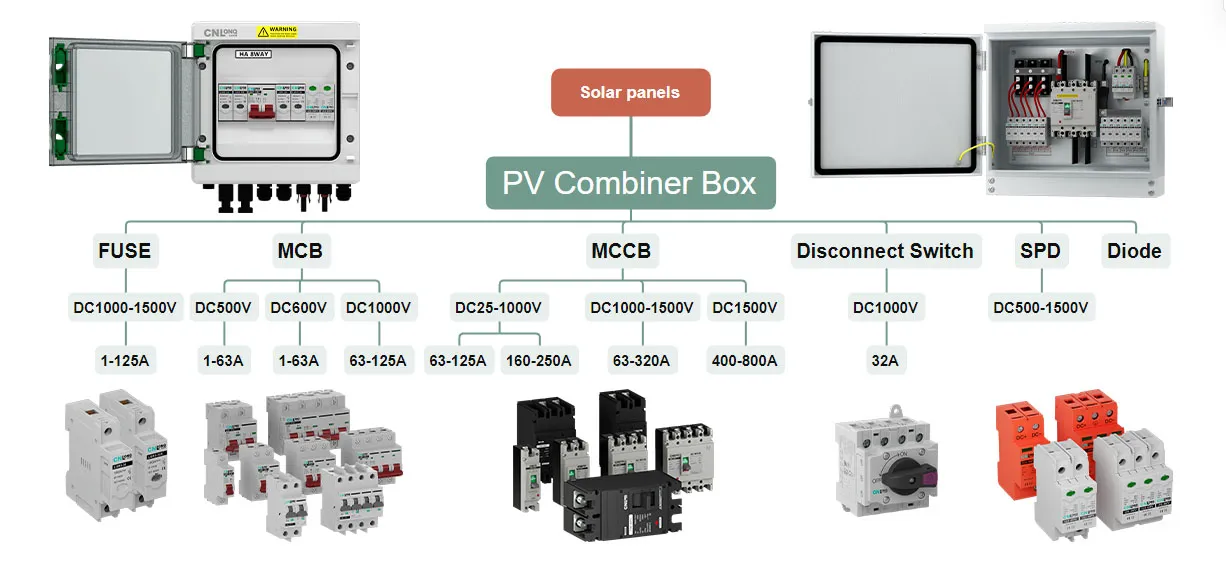
Key distinction: A PV combiner box is not the same as a standalone fuse or circuit breaker. A fuse only provides overcurrent protection; a breaker only disconnects the circuit. A combiner box integrates string fusing, surge protection, and a DC disconnect into one compact, organized unit.
3. Recommendations by Application Scenario
| Scenario | Recommendation |
|---|---|
| Rooftop PV with 2 strings | Strongly recommended — cleaner wiring, string-level protection, easier troubleshooting |
| Small balcony solar/storage | Fewer strings — evaluate based on inverter inputs, but basic DC protection is still advised |
| Outdoor rooftop mounting | Outdoor-rated enclosure built-in SPD is the priority |
| Lightning-prone regions | SPD is mandatory; choose pluggable, replaceable modules |
4. Installation & Maintenance Best Practices
- Professional installation: Follow electrical codes strictly. Ensure all wire connections are properly torqued to prevent overheating from loose contacts;
- Semi-annual inspection: Check enclosure gaskets, terminal tightness, and the SPD status indicator window;
- Timely replacement: When the SPD indicator turns red, replace the surge module promptly to maintain protection;
- Qualified service only: DC-side maintenance must be performed by a certified electrician. Always open the disconnect switch and verify zero voltage before working.
Conclusion
Solar panels and inverters determine your system's energy output. A properly selected PV combiner box protects that investment and ensures long-term, safe, and reliable operation. Give it the attention it deserves when designing your home solar system.