English
 Español
 Deutsch
 Français
 عربي
عربي
PV DC Circuit Breaker Box vs. DC Isolator Switch: Functions, Applications & Selection Guide
Date:8/3/2026 10:48:16 AM Click:144
In PV system DC side design, the DC circuit breaker box and DC isolator switch are two critical devices often mentioned yet easily confused. Both belong to the DC switch product category, both feature IP66 ingress protection, IK10 impact resistance, and fire-retardant properties — but they differ fundamentally in core functionality, protection capability, and application scenarios. Choosing the right product not only affects system safety but also directly impacts operational efficiency and return on investment.
1. Core Function Comparison: Protective Switch vs. Isolation Device
1.1 PV DC Isolator Switch — The Visible Safety Breakpoint
The DC isolator switch is fundamentally an electrical isolation device whose primary mission is to provide a clear, visible physical disconnection point during maintenance, servicing, or emergency shutdown.
- No protection function: No overload or short-circuit protection capability; will not trip automatically during faults
- Switching principle: Only allowed to operate under no-load or light-load conditions; 严禁 breaking under heavy load
- Structural features: Relatively simple structure, mainly composed of contacts and operating mechanism, emphasizing visible break point
- Safety value: Meets the "obvious disconnection point" requirement for electrical maintenance, serving as the foundation for operational safety
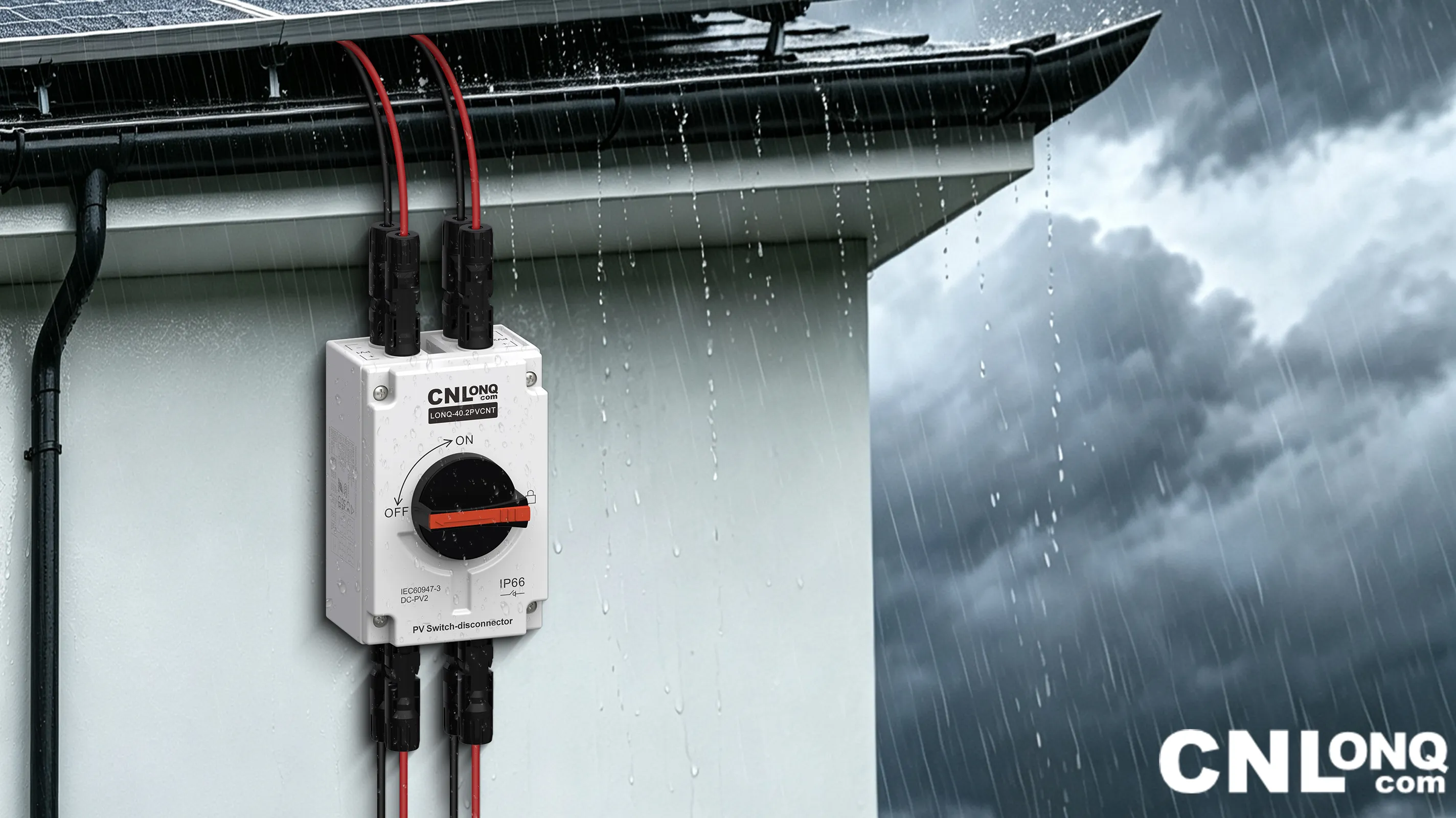
1.2 PV DC Circuit Breaker Box — The Active Protection Guardian
The DC circuit breaker box integrates a DC circuit breaker inside, serving as a complete package combining switching operation and fault protection.
- Dual protection: Built-in thermal trip (overload protection) magnetic trip (short-circuit protection), automatically trips during faults
- Load breaking: Capable of normal make-and-break under rated load, reliably interrupts short-circuit current
- Professional arc quenching: Equipped with DC-specific arc chute, effectively suppresses DC arcs (PV DC arcs are far more dangerous than AC arcs)
- Package advantage: Enclosure integrates circuit breaker, terminals, and waterproof connectors, ready for outdoor wall-mount installation
In short: The isolator switch provides "passive isolation" — creating a safety breakpoint through manual operation. The circuit breaker provides "active protection" — automatically detecting faults and interrupting the circuit.
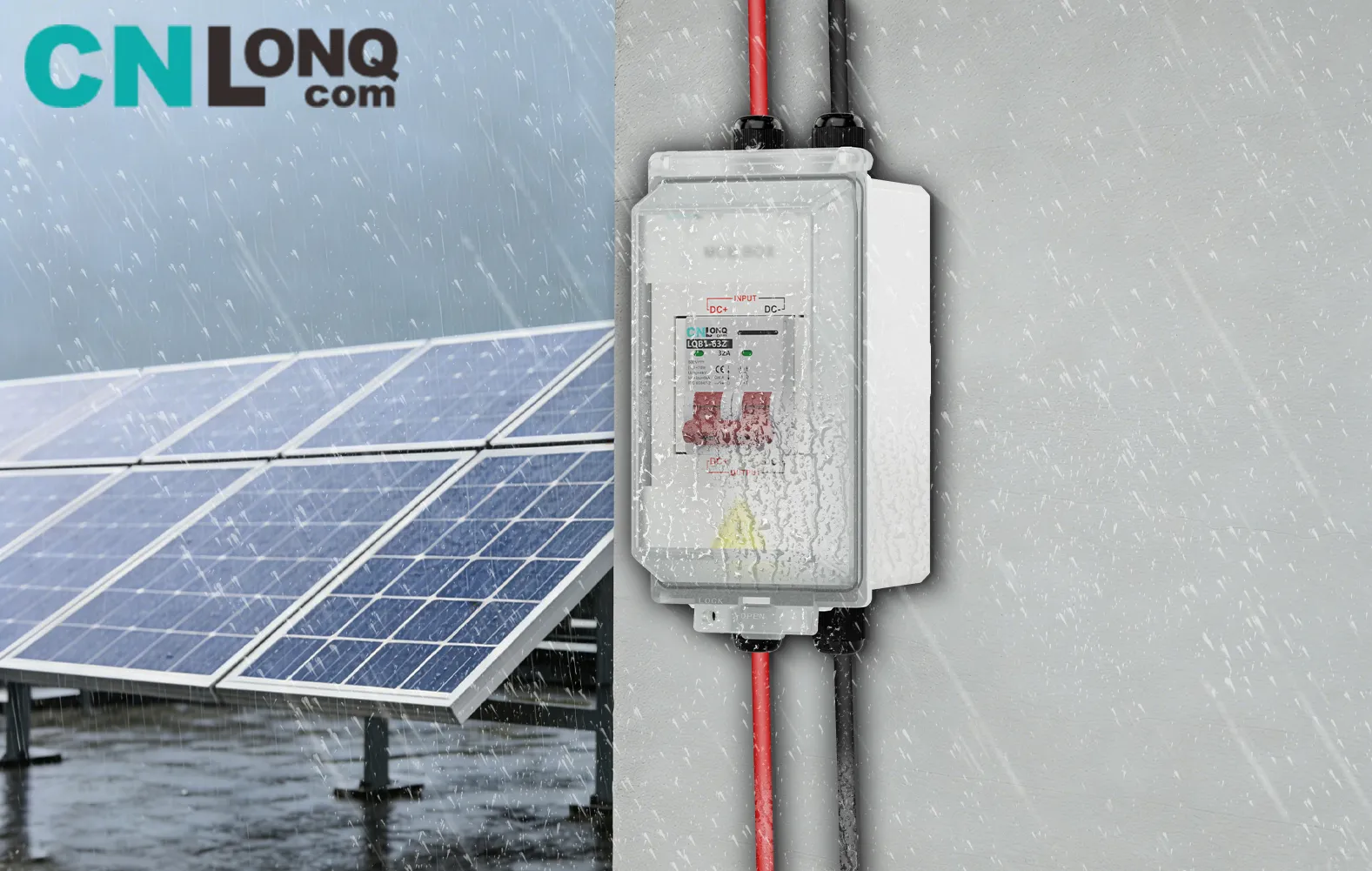
2. Shared Protection Features: IP66 IK10 Fire Retardant
Although the two products have different functional positioning, they share equally high standards when it comes to withstanding harsh outdoor environments.
2.1 IP66 Ingress Protection — Dustproof & Waterproof in All Directions
- First digit "6" (Dustproof): Completely prevents foreign objects and dust from entering, ensuring internal conductive components remain free from sand and dust contamination
- Second digit "6" (Waterproof): Withstands powerful water jet impact without water ingress, suitable for heavy rain, spray cleaning, and other scenarios
- PV value: Worry-free outdoor installation in deserts, coastal areas, and rainy regions, ensuring long-term operational reliability
2.2 IK10 Impact Resistance — The Highest Mechanical Protection Grade
- Withstands 20 joules of impact energy without deformation or failure (equivalent to a 5kg weight falling from 40cm height)
- Effectively resists accidental impacts from hail, flying stones, and external collisions
- Particularly suitable for PV power stations in complex environments such as deserts, mountains, and industrial areas
2.3 Fire Retardant — Material-Level Safety Assurance
- Housing made of flame-retardant engineering materials, meeting UL94 V-0 flammability standard
- Self-extinguishes upon removal of flame, will not spread combustion, effectively reducing electrical fire risk
- Adds an additional material safety barrier for the system when facing extreme situations such as DC arcs and module short circuits
Common ground: Both products can "withstand" harsh outdoor environments — but "what they do after withstanding" is where the essential difference lies.
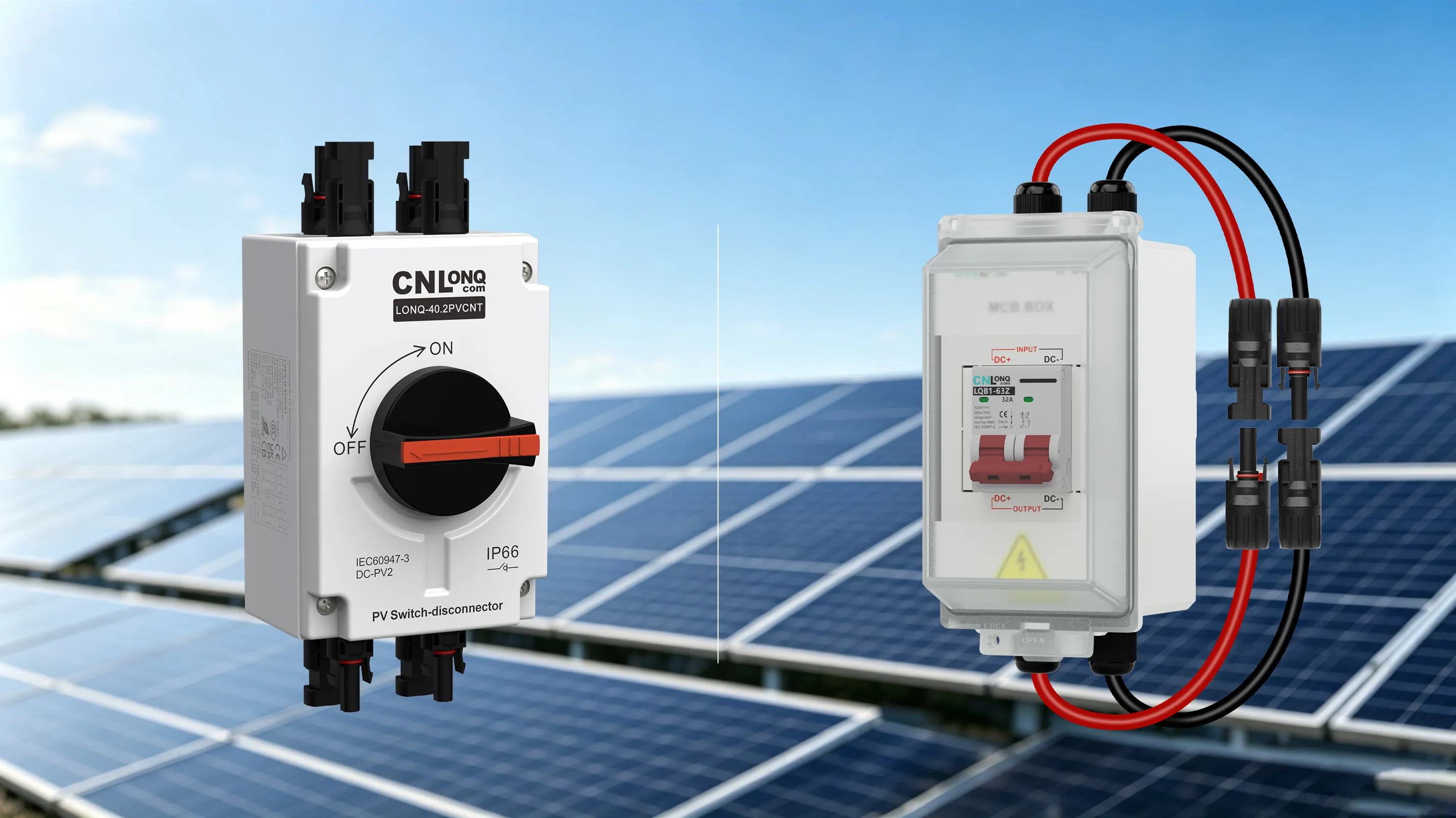
3. Recommended Application Scenarios: Each Plays Its Role
3.1 DC Isolator Switch — Recommended Applications
| Scenario Type | Specific Application | Selection Rationale |
| Inverter DC side | Before the inverter DC input terminal | Provides an obvious disconnection point during inverter maintenance, ensuring personnel safety |
| Combiner box output | DC output terminal of combiner box | Serves as system-level isolation switch, forming hierarchical protection with internal branch circuit breakers |
| String maintenance point | Each string input of string inverter | Power isolation during single-string maintenance without affecting normal operation of other strings |
| Distribution room | Isolation breakpoint in DC cabinet | Serves as safety supplement for electrical isolation in indoor scenarios |
Typical case: In a 100MW ground-mounted power station, each inverter is equipped with one DC isolator switch on the DC side. Before maintenance, operators simply open the isolator switch to confirm complete DC-side power-off, safely performing inverter internal cleaning, firmware upgrades, and other operations.
3.2 DC Circuit Breaker Box — Recommended Applications
| Scenario Type | Specific Application | Selection Rationale |
| Combiner box branch protection | Each PV string input terminal | Automatically trips during single-string short circuit/overload, protecting modules, cables, and combiner boxes |
| DC main circuit | DC main cable from combiner box to inverter | Main line overload and short-circuit protection, preventing fault escalation |
| Small residential systems | Residential PV DC side main switch | One device meets both isolation and protection needs, simplifying system configuration |
| Commercial & industrial rooftops | Rooftop distributed PV DC side | Outdoor wall-mount installation, IP66 adapts to rooftop sun and rain environments |
| PV water pumping/off-grid | Off-grid PV DC distribution | Serves as core DC protection in standalone systems |
Typical case: In a 500kW commercial rooftop project, DC circuit breaker boxes were configured in the combiner area as the main DC protection. During a short circuit caused by string cable insulation damage, the circuit breaker tripped within milliseconds to cut off the fault circuit, preventing cable fire and module damage.
4. Selection Guide: Five Steps to Choose the Right Product
Step 1: Clarify Core Needs — "Protection" or "Isolation"?
- If your primary requirement is fault protection (preventing short-circuit fires, protecting equipment) → Choose DC circuit breaker box
- If your primary requirement is maintenance isolation (creating safety breakpoints, facilitating operation) → Choose DC isolator switch
In most PV systems, the two are not mutually exclusive but complementary: circuit breakers handle "daily protection," while isolator switches handle "maintenance power-off."
Step 2: Calculate System Parameters
| Parameter | Selection Key Points |
| Rated voltage | Must be ≥ system maximum DC voltage (commonly 1000Vdc / 1500Vdc) |
| Rated current | Circuit breaker must be ≥ maximum circuit operating current with margin; same for isolator switch |
| Breaking capacity | Circuit breaker short-circuit breaking capacity must meet system maximum short-circuit current |
Step 3: Confirm Installation Environment
- Outdoor wall-mount installation: Prioritize DC circuit breaker box (complete package, easy installation)
- Cabinet/indoor installation: Both isolator switches and small DC circuit breakers work
- High-corrosion/coastal areas: Confirm whether housing material is corrosion-resistant engineering plastic or stainless steel
Step 4: Focus on Certifications & Standards
- Must select PV-specific DC products; AC switches must never be used as substitutes
- Prioritize products with authoritative certifications such as TÜV, UL, CE, CCC
- Confirm products comply with IEC 60947-3 (isolator switches) or IEC 60947-2 (circuit breakers) standards
Step 5: Consider Total Lifecycle Cost
| Dimension | DC Isolator Switch | DC Circuit Breaker Box |
| Procurement cost | Lower | Higher |
| Protection capability | No active protection | Overload short-circuit dual protection |
| Maintenance cost | Requires coordination with protection equipment | High integration, reduces additional configurations |
| Fault risk | No automatic protection, higher fault loss risk | Active protection, reduces fault losses |
Cost perspective: Although circuit breakers cost 30%~50% more to purchase, the module, cable, and downtime losses avoided by a single short-circuit fault often far exceed the price difference.
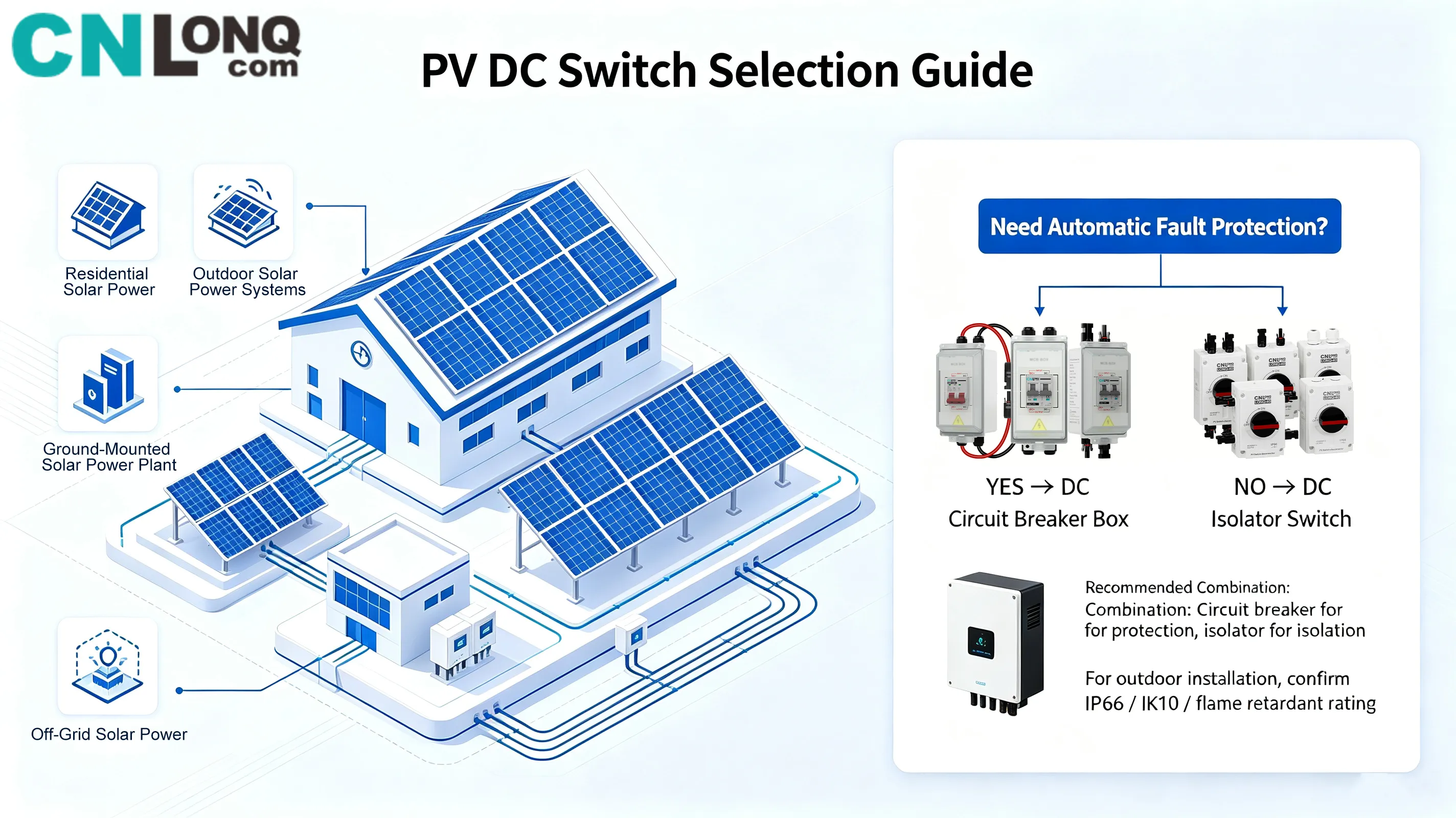
5. Summary: Selection Decision Tree
Is automatic fault protection needed?
├── Yes → DC circuit breaker box
│ └── Is maintenance isolation also needed?
│ └── Yes → Use circuit breaker isolator switch combination
└── No → DC isolator switch only
└── Is outdoor installation required?
└── Yes → Confirm IP66/IK10/flame-retardant housing model
In PV system DC side design, there is no "better" product — only the "more suitable" choice. The DC isolator switch is the bottom-line guarantee for maintenance safety, while the DC circuit breaker box is the active barrier for system protection. Both have comparable protection ratings but serve distinct purposes.
For the vast majority of PV power stations, the "circuit breaker for protection isolator switch for isolation" combination is the most reliable and industry-standard compliant solution. Investment safety is always the first prerequisite for long-term PV system returns.
For bulk procurement or custom configuration solutions, contact our technical team for professional PV DC switchgear recommendations tailored to your project requirements.