English
 Español
 Deutsch
 Français
 عربي
عربي
Disconnector Switch Complete Guide: From Principles to Selection – CNLONQ Delivers Safe and Reliable Electrical Isolation Solutions
Date:7/23/2026 2:12:39 PM Click:273
1. What is a Disconnector Switch?
A disconnector switch (also known as an isolator switch or disconnect switch) is a switching device used in electrical power systems to isolate the power source and create a visible break point. It is widely regarded as the "safety guardian" of electrical systems.
Core Features:
- No arc-quenching capability: Can only open/close circuits under no-load current conditions
- Visible break point: Provides specified insulation distance between contacts in the open position, clearly visible to the naked eye
- Safety isolation: Ensures reliable isolation between maintenance personnel and live equipment
2. Working Principle
Disconnector switches achieve physical circuit isolation through mechanical transmission:
- Closed position: Conductive contacts make reliable contact, carrying normal operating current and short-circuit current
- Open position: Sufficient air insulation gap is formed between contacts, establishing a visible break point
- Transmission mechanism: The operating mechanism (manual/electric/pneumatic) drives insulating supports and conductive arms to rotate, completing opening and closing operations
Important Principle: Disconnector switches must only be operated after the circuit breaker has disconnected the load. Never operate under load conditions.
3. Main Functions
3.1 Power Source Isolation for Safety
This is the most core function. Creates an air insulation gap during equipment maintenance to prevent accidental electric shock, creating a safe working environment for maintenance personnel.
3.2 Operating Mode Switching
In double-busbar, bypass, and other wiring configurations, works with circuit breakers to complete circuit switching and change system operating modes.
3.3 Making/Breaking Small Current Circuits
Can switch no-load transformers, voltage transformers, surge arresters, and other small-capacity load circuits.
3.4 Back-Feed Prevention
During power outage maintenance, the visible break point prevents accidents caused by reverse power feed from lateral sources.
4. Types of Disconnector Switches and Applications
4.1 Classification by Voltage Level
| Type | Voltage Range | Typical Applications |
| High Voltage Disconnector | 126kV and above | Substations, transmission lines, large power plants |
| Medium Voltage Disconnector | 10kV~35kV | Distribution stations, industrial power distribution, PV box transformers |
| Low Voltage Disconnector | Below 1000V | Building power distribution, residential distribution boxes, PV DC side |
4.2 Classification by Installation Environment
a. Indoor Type (GN Series)
- Compact structure, small footprint
- Suitable for indoor switchgear and distribution cabinets
- Commonly found in industrial plants and commercial building power rooms
b. Outdoor Type (GW Series)
- Larger insulation dimensions, higher mechanical strength
- Pollution-resistant, strong weatherability
- Widely used in substations, photovoltaic power stations, and wind farms
4.3 Classification by Number of Poles
| Pole Configuration | Application Scenarios |
| 1P (Single Pole) | Single line isolation, separate positive/negative isolation in DC systems |
| 2P (Double Pole) | Single-phase AC (live neutral), DC systems (both positive and negative disconnected) |
| 3P (Three Pole) | Three-phase AC systems, industrial power distribution |
| 4P (Four Pole) | Three-phase neutral, ATS dual power systems, TN grounding systems |
4.4 Classification by Structure
a. Knife-Type Disconnector
- Simple structure, intuitive operation
- Most common in low-voltage distribution systems
- Residential distribution box main switch, industrial distribution cabinets
b. Rotary Disconnector
- Rotary contact design, reliable contact
- Suitable for high-current applications
- PV combiner boxes, DC distribution cabinets
c. Plug-In Disconnector
- Plug-in structure, easy installation
- Commonly used in drawer-type switchgear
- Industrial automation, data center power distribution
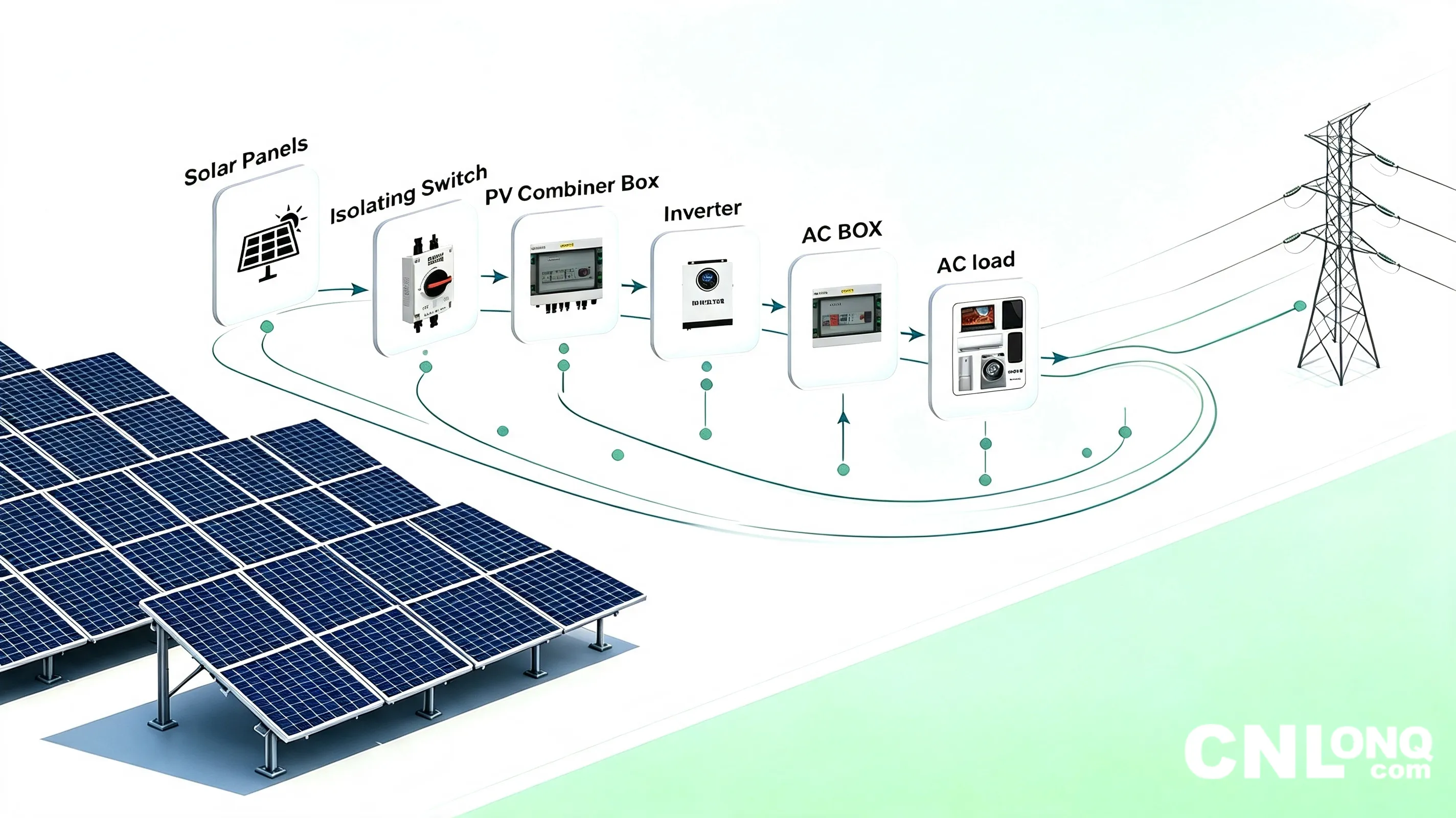
4.5 PV-Specific DC Disconnector Switches
With the rapid development of new energy, DC disconnector switches have become core components in photovoltaic systems:
- Installation position: Between PV string and inverter, DC side of combiner box
- Voltage rating: DC 1000V / 1500V
- Special requirements: DC arc quenching is more difficult, requiring specialized contact design
- Typical scenarios: Residential PV, commercial & industrial PV, ground-mounted power stations
5. How to Choose a Residential Disconnector Switch?
5.1 Determine Pole Configuration
- Single-phase service (230V): Choose 2P disconnector to disconnect both live and neutral wires
- Three-phase service (400V): Choose 3P or 4P disconnector
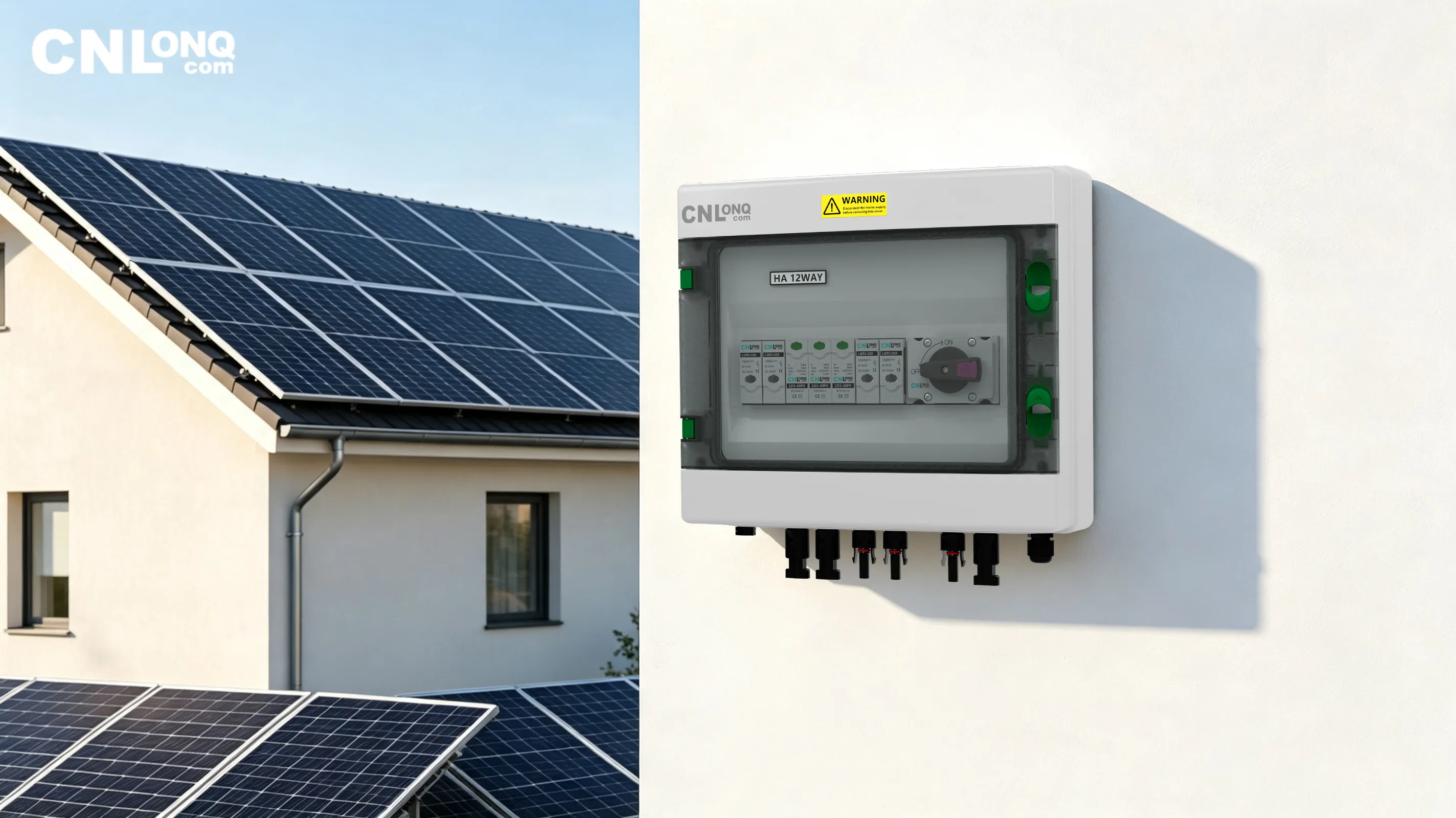
- PV systems: Use 2P DC disconnector on the DC side (DC 1000V/1500V)
5.2 Rated Current Matching
- Residential main switch: 63A~100A (based on service wire size and total power)
- Branch circuits: 32A~63A (front-end of high-power equipment like AC, water heaters)
- PV DC side: Select at 1.25 times the string current
5.3 Key Parameter Verification
| Parameter | Residential Recommended Value | Notes |
| Rated Voltage | DC1200~1500V | Match incoming voltage |
| Rated Current | 1~32A | Leave margin, not less than total load |
| Protection Degree | IP20~IP66 | For indoor distribution box use |
| Standards Certification | IEC 60947-3 | Ensure product compliance |
5.4 Installation Position Recommendations
- ✅ Main distribution box front: Used for whole-house power outage maintenance
- ✅ High-power equipment front: Central AC, electric water heaters, EV chargers
- ✅ PV inverter DC side: Completely disconnect DC power during system maintenance
- ❌ Daily switching use: Disconnectors are not designed for frequent operation
6. CNLONQ Disconnector Switch Product Recommendations
🌟 CNLONQ Low Voltage Disconnector Series
Product Features:
- ✅ High-reliability contacts: Silver-based alloy contacts, low contact resistance, low temperature rise
- ✅ Modular design: DIN rail mounting, perfectly compatible with circuit breakers
- ✅ Visible break point: Clear ON/OFF indication for obvious safety
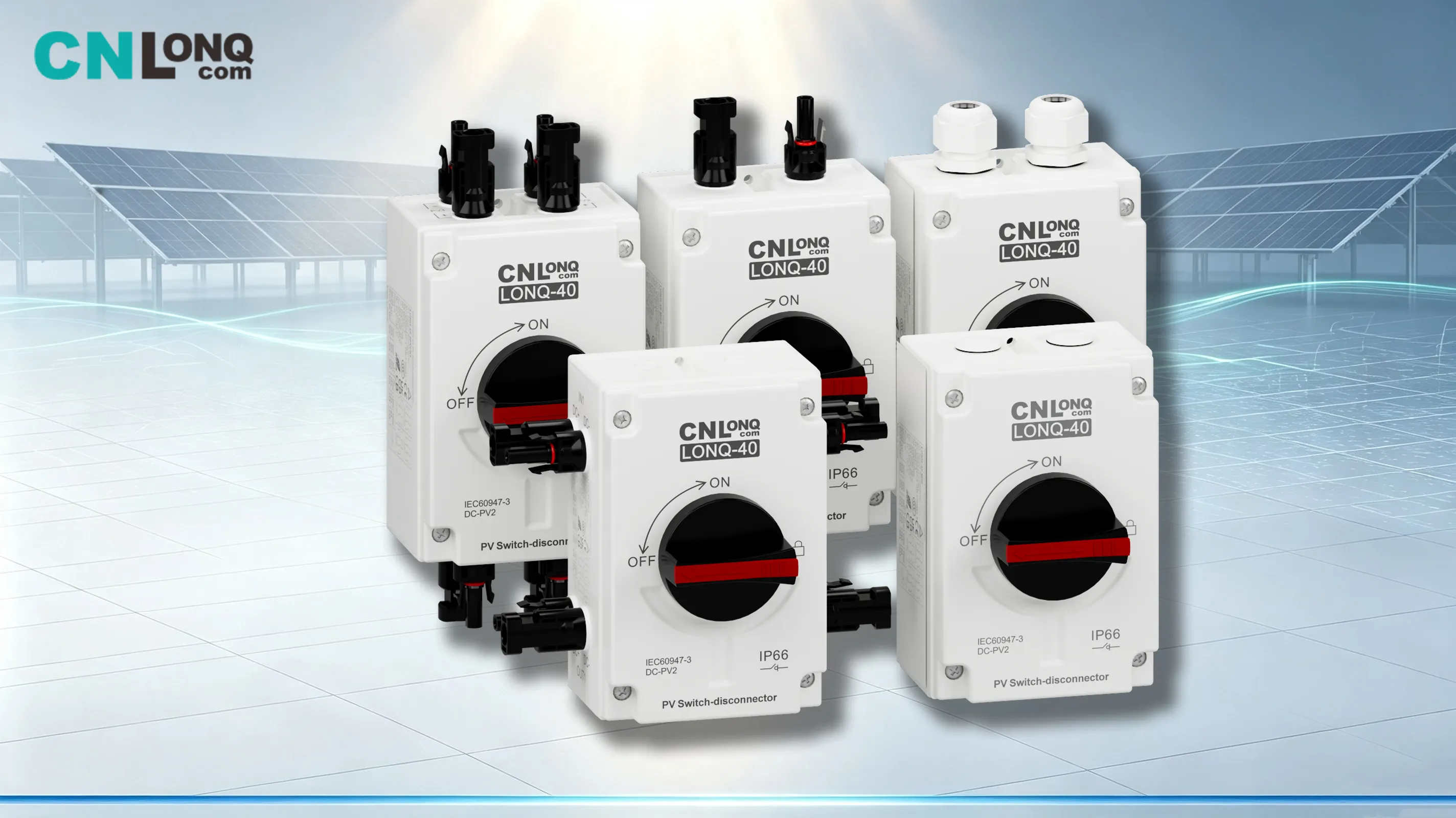
🌟 CNLONQ PV DC Disconnector Switch
Designed specifically for photovoltaic systems:
- ⚡ High voltage rating: DC 1200V ~1500V, compatible with mainstream PV systems
- ⚡ DC-specific contacts: Optimized arc-quenching design for DC switching challenges
- ⚡ IP66 protection: Worry-free outdoor installation, excellent weatherability
- ⚡ UL/TUV certified: Global export-ready, quality guaranteed
Application Scenarios:
- Residential PV system DC side isolation
- Commercial & industrial PV combiner boxes
- Ground-mounted power station DC distribution cabinets
- Energy storage system BMS front-end isolation
-
7. Why Choose CNLONQ?
🏆 Professional Quality You Can Trust
- 20 years of R&D and manufacturing experience in PV electrical equipment
- Products certified by UL, TUV, CE, CEand other international standards
- Annual production capacity 5 million units, reliable delivery
🌍 Global Service, Local Support
- Products exported to 80 countries including the Middle East, Europe, Southeast Asia, and Latin America
- Professional technical team provides selection guidance and solution design services
- Fast response, technical support within 24 hours
💡 One-Stop PV Electrical Solution
CNLONQ offers not only disconnector switches but a complete PV electrical product matrix:- PV Combiner Boxes (smart combining, integrated monitoring)
- MC4 PV Connectors (IP68 waterproof, TUV certified)
- DC Circuit Breakers (DC1000V/1500V, UL94V-0 flame retardant)
- SPD Surge Protective Devices (Class I II combined protection)
- ATS Dual Power Automatic Transfer Switches
Conclusion
Though small in size, the disconnector switch is the first line of defense for electrical safety. Whether for residential power distribution or photovoltaic power stations, choosing a reliable disconnector switch is crucial.CNLONQ – Your trusted PV electrical expert. From residential to industrial, from AC to DC, we provide a full range of high-quality disconnector switch products to safeguard your electrical safety.