English
 Español
 Deutsch
 Français
 عربي
عربي
From Core to Shell: A Comprehensive Guide to Choosing the Right Photovoltaic Combiner Box
1. What Is a Photovoltaic Combiner Box?
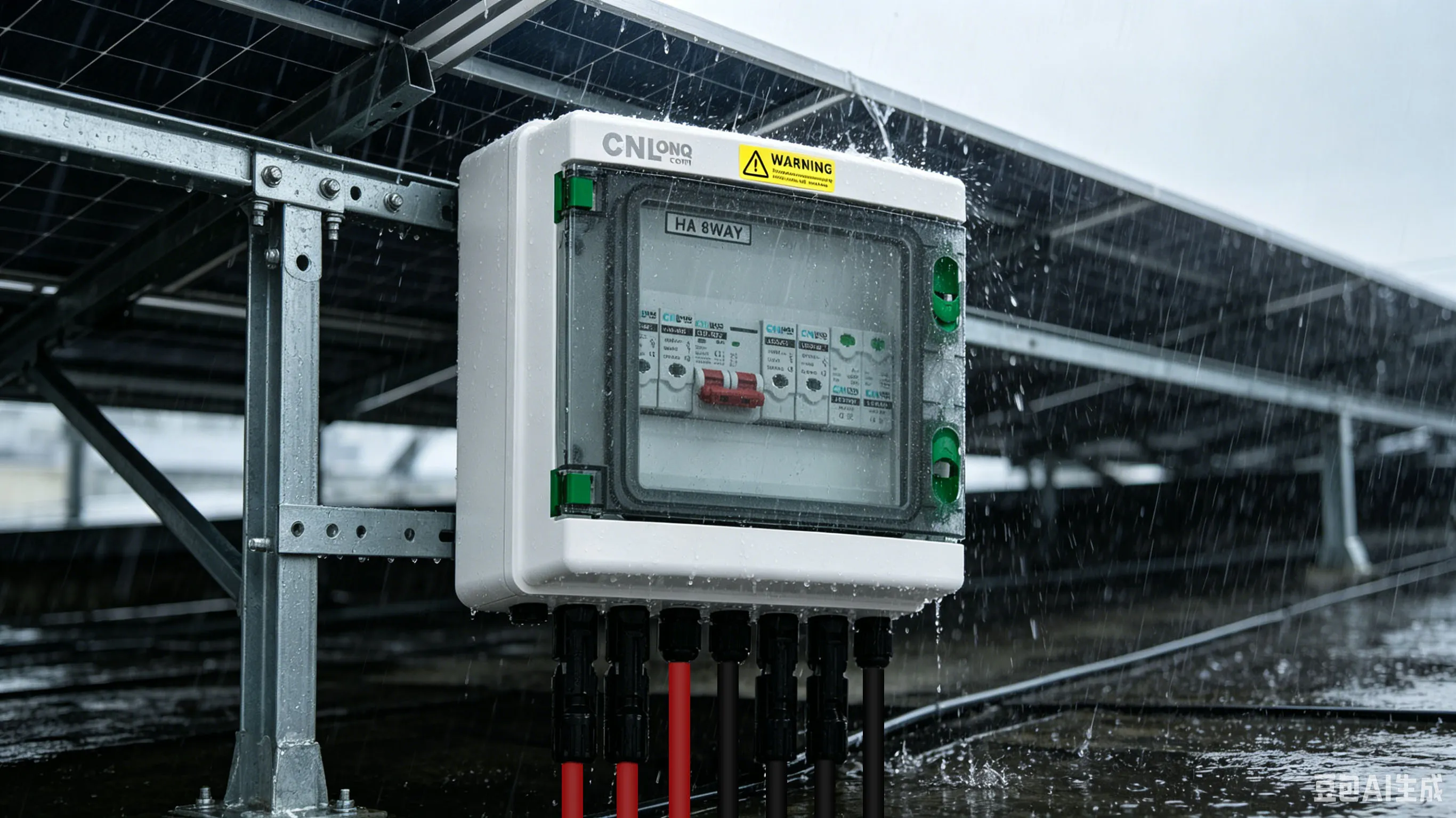
A PV combiner box is a device that consolidates the DC output cables from multiple PV strings. In large-scale PV arrays, hundreds or even thousands of modules generate current that must be "assembled" for the first time at the combiner box before being transmitted to the inverter for DC-to-AC conversion. More than just a current "relay station," it serves as the system's first "safety gateway," undertaking multiple functions including protection, monitoring, and communication.
2. How Does a Combiner Box Work?
The core working principle of a combiner box is straightforward: it connects the positive and negative poles of multiple PV strings in parallel and integrates them into one or multiple output circuits via internal busbars. However, during this process, it simultaneously handles overcurrent protection, surge protection, voltage monitoring, and fault isolation. When an abnormality occurs in a string—such as a short circuit, reverse connection, or lightning surge—the protective components inside the combiner box act swiftly to isolate the faulty circuit, ensuring the overall safety of the power station and minimizing power loss caused by localized failures.
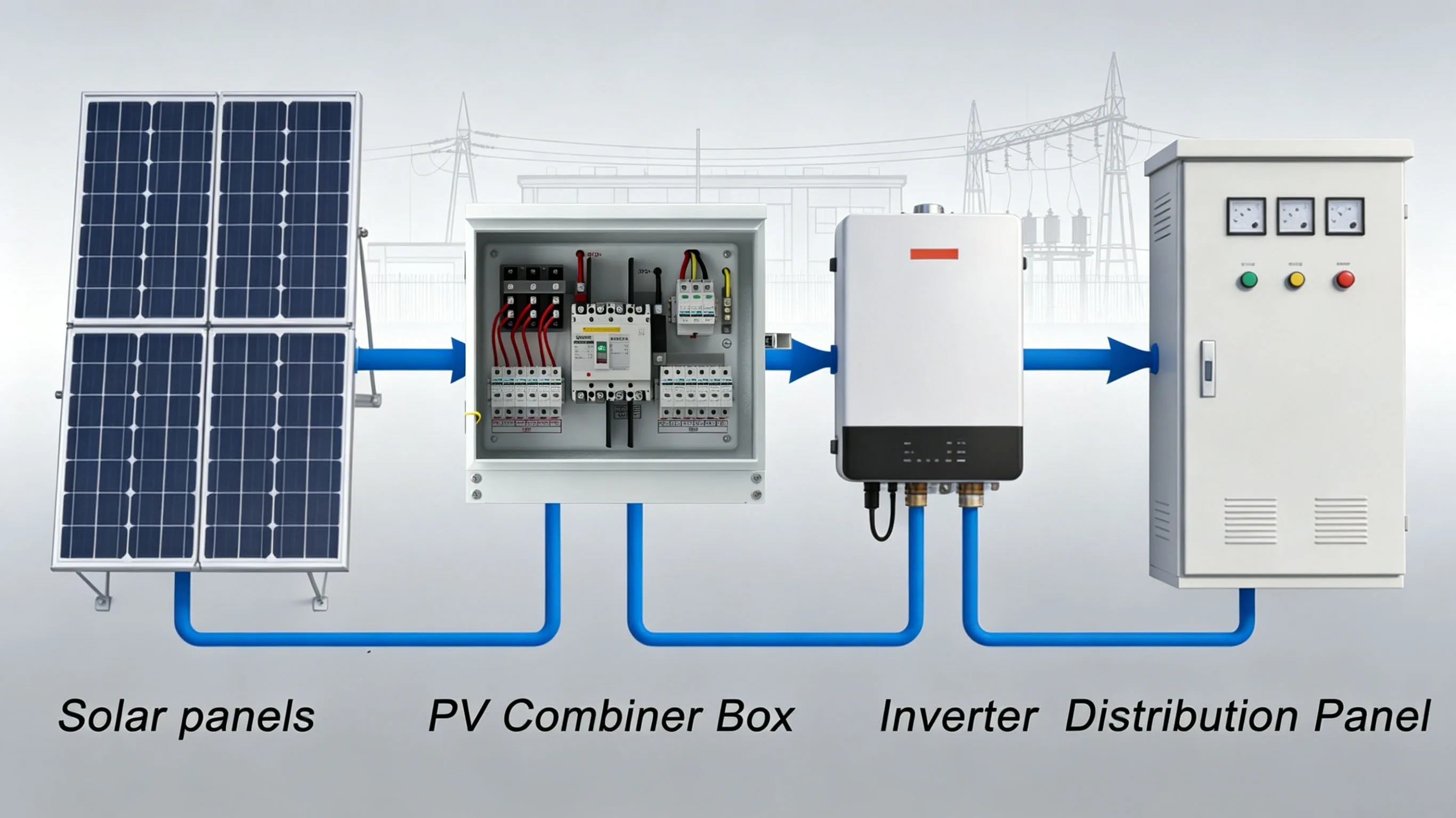
3. How to Properly Configure the Core Components Inside a Combiner Box?
The true value of a high-quality combiner box lies in the precise selection and rational layout of its internal components. Below are the configuration guidelines for six key components:
-
Fuses (FUSE): As the first line of defense for each string, fuses provide fast response to overcurrent conditions by melting and disconnecting the circuit when current exceeds safe levels. Selection must precisely match the module's maximum short-circuit current and normal operating current, while also accounting for the arc-extinguishing capability differences between DC and AC fuses.
-
Miniature Circuit Breakers (MCB): MCBs are typically used for overload and short-circuit protection on branch circuits or the main output. Their trip thresholds must be accurately calibrated to avoid nuisance tripping during normal fluctuations while ensuring reliable disconnection under actual fault conditions.
-
Molded Case Circuit Breakers (MCCB): For high-current circuits such as the combined main output, MCCBs provide higher breaking capacity and thermal-magnetic protection. They serve as the safety cornerstone for the main output side, especially suitable for high-power inverter front-ends.
-
Isolating Switches: These provide a visible and clear electrical disconnection point for maintenance or emergency situations, ensuring operator safety. They must meet the requirements for no-load switching under high DC voltage and feature visible contact gaps.
-
Surge Protective Devices (SPD): PV systems are exposed to outdoor environments and are highly susceptible to lightning strikes or grid surge events. SPDs rapidly discharge surge energy, clamp voltages, and protect expensive downstream equipment such as inverters. Key parameters for selection include DC withstand voltage, nominal discharge current, and response time.
-
Anti-Reverse Diodes: Typically connected in series on the positive output of each string, these diodes prevent current backflow caused by voltage imbalances between strings. This avoids hot-spot effects on modules and efficiency losses, making them essential for maintaining stability in multi-string parallel operation.
Configuration Principle: All components must meet the system's rated voltage, current, prospective short-circuit current, and ambient temperature requirements. Additionally, adequate electrical clearances and creepage distances must be maintained in compliance with safety standards such as IEC 61439.
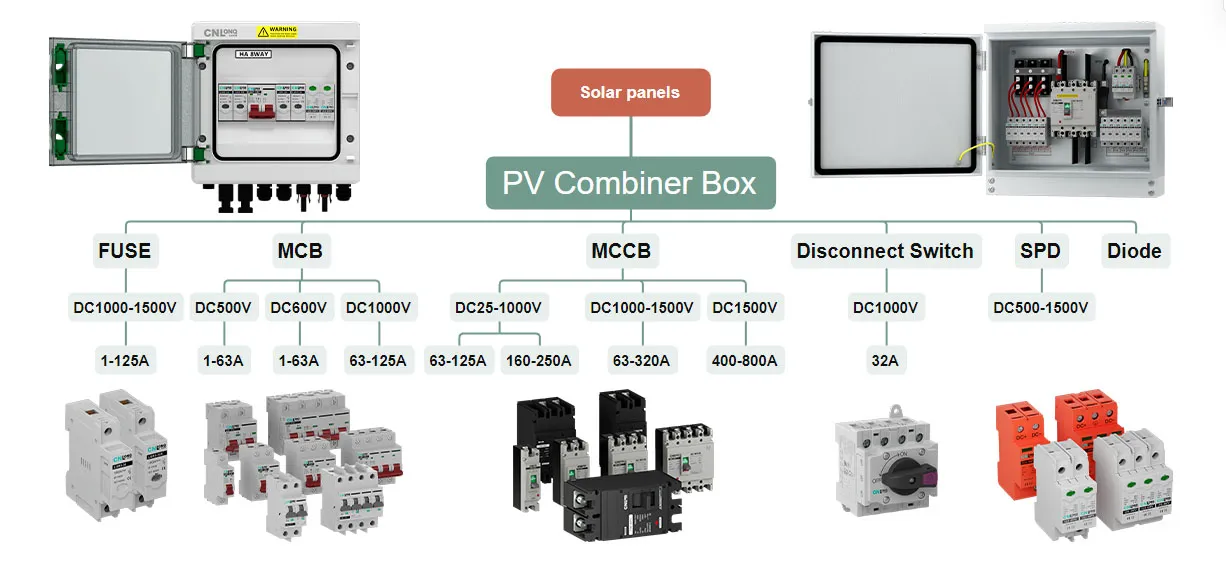
4. The Combiner Box Enclosure: A Critical but Often Overlooked Protective Barrier
If the internal components determine the "intelligence" of a combiner box, the enclosure defines its "physical resilience." In actual projects, improper enclosure selection is often an invisible killer that leads to premature aging and frequent failures.
Ingress Protection (IP) Ratings are the primary consideration. CNLONQ offers a full range of enclosures with protection grades from IP65 to IP68, capable of addressing diverse installation environments:
-
IP65 (Dust-tight and protected against water jets): Suitable for the vast majority of commercial/industrial rooftops and ground-mounted power plants, effectively resisting heavy rain and dust ingress.
-
IP66 (Dust-tight and protected against powerful water jets): Ideal for coastal areas and regions with high winds, capable of withstanding heavy water impact from storms or seawater spray.
-
IP67/IP68 (Dust-tight and protected against temporary/continuous immersion): Designed for low-lying flood-prone areas, agricultural PV projects, or scenarios requiring regular high-pressure water washing, ensuring internal safety even during brief submersion.
Material Selection is equally critical. CNLONQ provides four mainstream material options to meet different cost and durability requirements:
-
PC (Polycarbonate): Lightweight, excellent electrical insulation, and highly corrosion-resistant. Ideal for residential distributed systems or chemical plant environments where corrosion protection is a top priority.
-
Cold-Rolled Steel: High mechanical strength and cost-effective, suitable for standard ground-mounted power plants. With outdoor powder coating, weather resistance is significantly enhanced.
-
304 Stainless Steel: Offers substantially improved corrosion resistance over cold-rolled steel, making it ideal for coastal salt-spray environments or general industrial areas with mild acidity/alkalinity.
-
316 Stainless Steel: The "premium grade" among stainless steels, providing exceptional resistance to chlorides and aggressive acidic/alkaline media. Specifically engineered for offshore PV installations, tidal flats, or highly corrosive, high-humidity environments.
Additionally, CNLONQ supports customized enclosure colors, allowing project-specific visual branding or corporate identity integration—delivering both functional protection and aesthetic consistency.
5. Why Do So Many Projects Choose CNLONQ Combiner Boxes?
Once you understand the "internal core" and "external armor" of combiner boxes, brand selection determines whether these designs will perform reliably under real-world conditions. Among the many brands, CNLONQ stands out as a deeply trusted partner in the PV combiner box sector, backed by two decades of focused expertise.
1. Global Certifications, Worldwide Acceptance
With 20 years of dedicated experience in the PV new energy industry, CNLONQ's products are certified to multiple international standards, including CE, ISO, TUV, RoHS, and IEC. This means every combiner box—whether in terms of internal components or enclosure protection—meets the most rigorous technical requirements, ensuring long-term stable operation in extreme climates across Europe, the Americas, Southeast Asia, and beyond.
2. Flexible Customization, One-Stop Solutions
CNLONQ offers free OEM/ODM customization services to address project-specific needs. From component brand selection and internal layout optimization to enclosure material (PC/Cold-Rolled Steel/304/316), IP rating (IP65–IP68), and even exterior color—everything can be tailored. More importantly, CNLONQ provides a "one-stop PV system solution design" service, helping clients avoid hidden incompatibility issues during the early project stages and significantly shortening the engineering timeline.
3. Quality First, Proven Reputation
CNLONQ employs advanced automated production lines and a comprehensive quality inspection system, ensuring every detail—from torque accuracy on screws to crimping integrity on wiring—is precisely controlled. Over the years, their products have been successfully deployed in large-scale ground-mounted plants, commercial/industrial distributed systems, agrivoltaic projects, and offshore installations, earning consistent user praise for "stable performance, low failure rates, and rapid after-sales response." This strong reputation stems from an unwavering commitment to wholehearted customer service.
4. Full Service Lifecycle, Worry-Free Support
From technical selection consulting and installation guidance to extended warranties and rapid-response support, CNLONQ has built a complete service closed-loop. Choosing CNLONQ means selecting not just a piece of equipment, but a technically experienced "partner" who ensures peace of mind and operational assurance throughout the entire project lifecycle.
6. Conclusion: A Wise Choice Requires Comprehensive Evaluation—Inside and Out
Selecting a DC or AC combiner box is never a matter of simple parameter matching. It demands a holistic assessment of internal component configuration, enclosure protection capability, installation and maintenance convenience, system compatibility, manufacturing craftsmanship, and market reputation. With its solid technical foundation, internationally recognized certifications, a full enclosure protection matrix ranging from IP65 to IP68, flexible customization options, and thousands of successful project case studies, CNLONQ has established itself as a trustworthy leader in this field.
Whether serving large state-owned energy enterprises or supporting small commercial, industrial, and residential projects, CNLONQ's PV combiner boxes deliver exceptional adaptability and reliability, safeguarding your clean energy returns. In the long race of the new energy transition, choosing a brand with expertise, accountability, dedication to quality, and manufacturing excellence is unquestionably the smartest investment. CNLONQ—Protecting Every Watt of Your Green Energy, from Core to Shell.