 English
 Español
 Deutsch
 Français
 عربي
عربي
PV Combiner Box: A Complete Guide from Basics to Selection and Installation
Part 1: What is a PV Combiner Box?
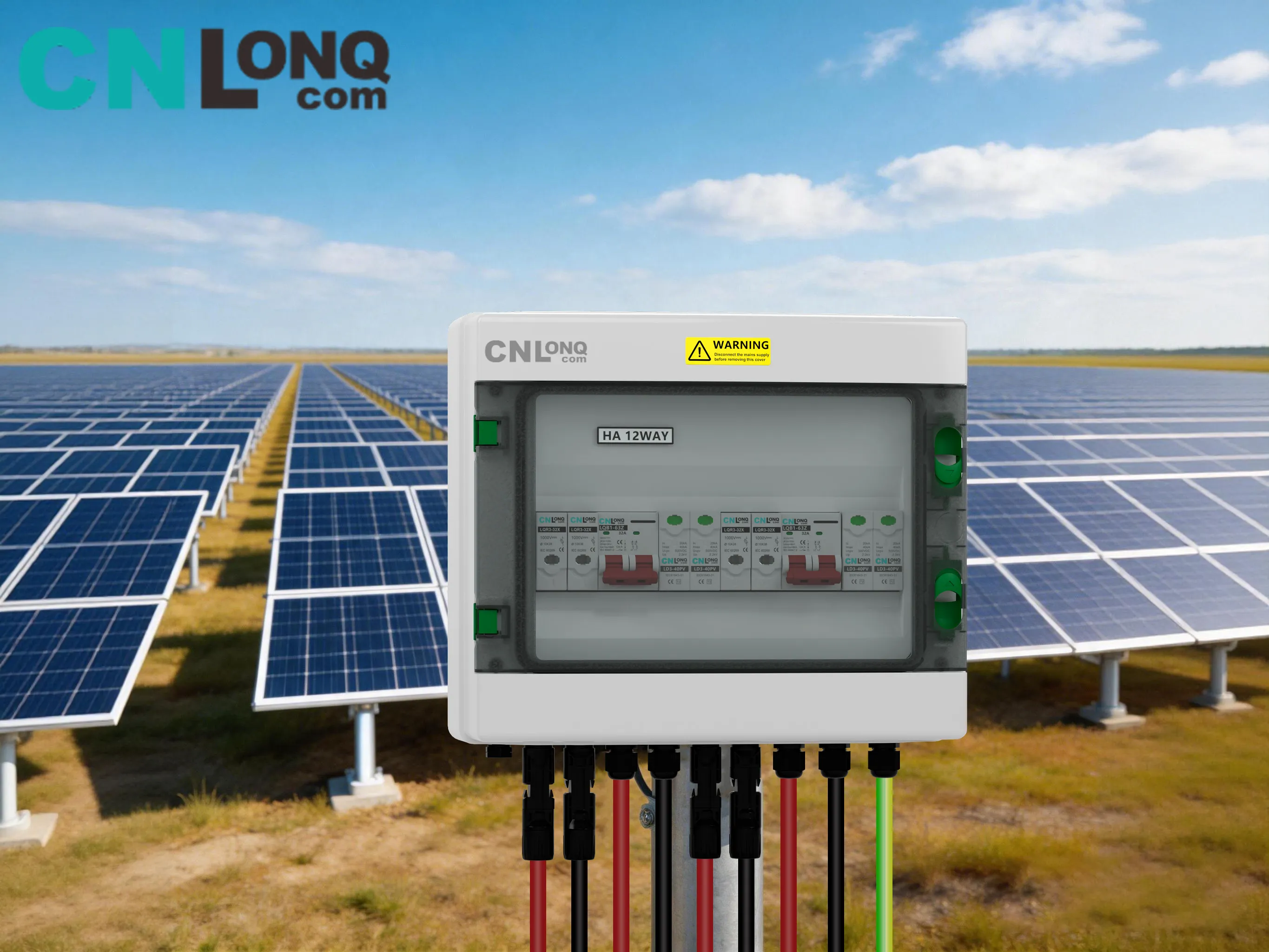
A PV combiner box is a key supporting device in a solar photovoltaic system. Its main function is to combine DC power from multiple PV strings into one or more outputs, while providing overcurrent protection, surge protection, and other features. Simply put, it acts as the "power distribution center" between the PV strings and the inverter.
In a typical PV power plant, there are often dozens or even hundreds of PV strings, each generating DC power. Connecting these strings directly to the inverter would not only result in complex wiring but also lack unified protection measures. The combiner box solves this problem by consolidating multiple inputs into a single output, significantly reducing the number of cables connected to the inverter, while equipping each input and the main output with protective devices.
Combiner boxes are typically installed near the PV array. Their enclosures are made of weather-resistant materials such as stainless steel or engineering plastics, with a protection rating of at least IP65, enabling them to withstand harsh outdoor conditions over the long term.
Part 2: Main Functions of a PV Combiner Box
- Combining Function
This is the most basic function of a combiner box. It combines multiple DC inputs from PV strings (typically 4, 8, 12, 16 strings or more) into one or more outputs, simplifying the wiring work for the inverter.
- Overcurrent Protection (Fuse)
Each PV string input is equipped with a DC fuse (typically rated 10A, 15A, 20A, etc.). When a short circuit or abnormally high reverse current occurs in a string, the corresponding fuse blows quickly, isolating the faulty branch and protecting the other normally operating strings and the entire system. The main output is also usually equipped with a DC circuit breaker or isolator switch for safe disconnection during maintenance.
- Surge and Lightning Protection (SPD)
Since PV systems are installed outdoors, they are highly susceptible to lightning strikes or grid surge events. Combiner boxes typically include DC surge protection devices (SPD) that divert overvoltages from lightning or surges to the ground, protecting expensive downstream equipment like the inverter. Generally, Type 2 or Type 3 surge protection is applied.
- Monitoring and Communication
Modern smart combiner boxes offer real-time monitoring of parameters such as current, voltage, and temperature for each string. This data can be uploaded to a monitoring system via RS485, Ethernet, or wireless communication. Operators can remotely check the status of each branch and quickly detect anomalies (e.g., lower-than-expected current in a string may indicate module failure or shading), greatly improving maintenance efficiency.
- Reverse Current Protection (Diode)
Some combiner boxes include blocking diodes to prevent a faulty string from drawing reverse current from other strings, thus avoiding module damage.
- Disconnection and Isolation (MCB/Disconnect Switch)
The output of a combiner box is usually equipped with a DC circuit breaker or load break switch, allowing manual disconnection of the system from the inverter when needed, facilitating safe maintenance and protecting personnel.
Part 3: How to Choose the Right Combiner Box for Your PV System
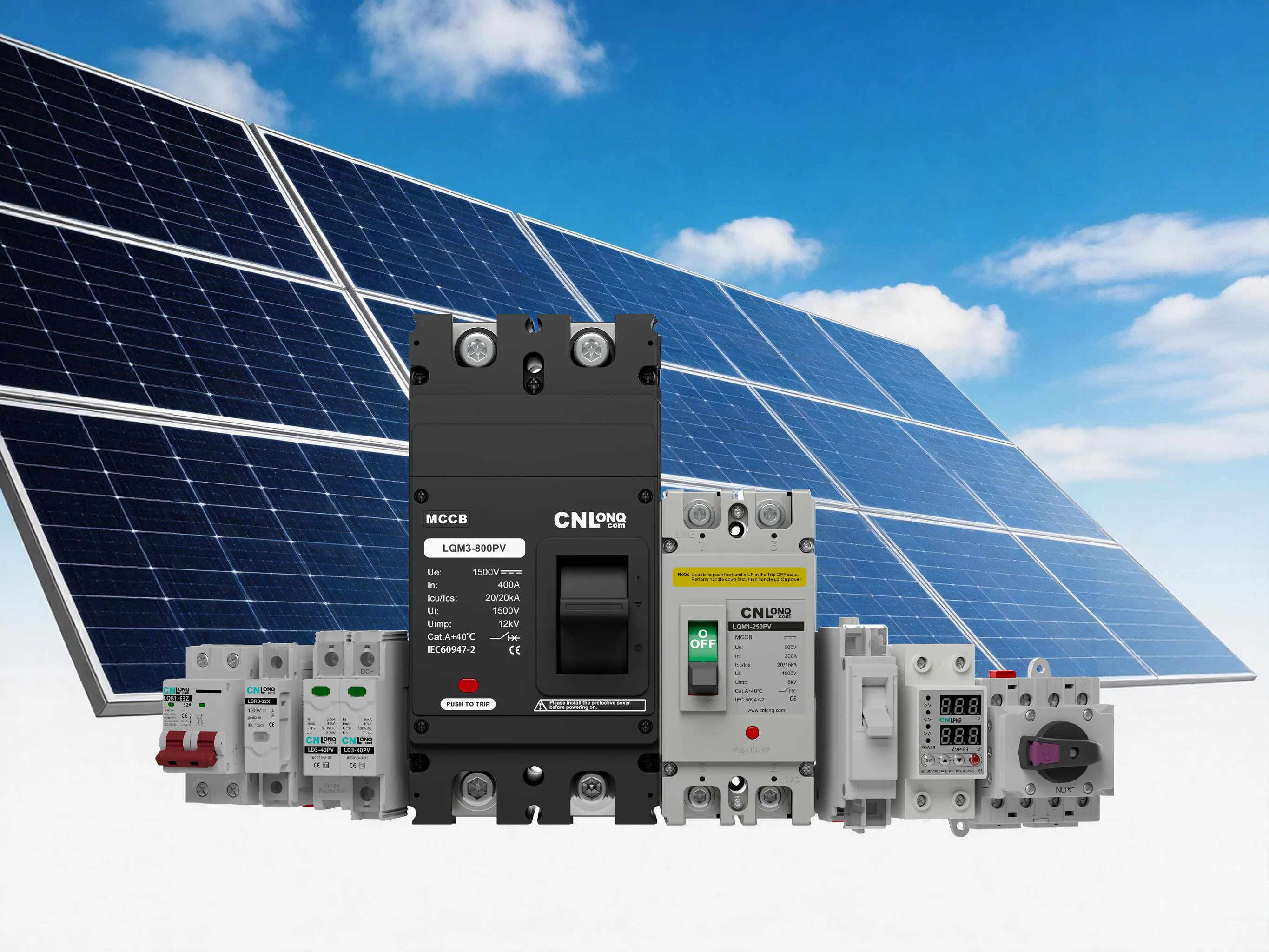
Selecting a combiner box requires comprehensive consideration of system size, voltage level, current parameters, and environmental conditions. Below are key selection criteria.
- Number of Inputs
Choose the number of inputs based on the number of PV strings in your system. Common configurations include 4-in-1-out, 8-in-1-out, 12-in-1-out, and 16-in-1-out. As a rule, the number of inputs should be greater than or equal to the actual number of strings, with 1–2 spare inputs reserved for future expansion.
- Rated Voltage
The rated voltage of the combiner box must match the PV system and be greater than or equal to the maximum open-circuit voltage of the strings at the lowest expected temperature. Common voltage levels are 500V DC, 1000V DC, and 1500V DC. A 1500V system must use a 1500V-rated combiner box – never derate a lower-voltage unit.
- Rated Current
Per input current: The rated current per input should be ≥ 1.25 × Isc (string short-circuit current). For example, if Isc = 10A, the fuse rating per input should be 15A.
Total output current: Approximately the sum of all input currents multiplied by a diversity factor (typically 0.8–1.0). The rated current of the main output breaker must exceed the maximum output current.
- Fuse Specifications
The fuse rating per input follows the same rule (≥ 1.25 × Isc). Always use DC fuses with the gPV characteristic, compliant with IEC 60269-6. The fuse's breaking capacity must exceed the maximum prospective short-circuit current at the installation point.
- Surge Protection Level
Choose the surge protection module according to the local frequency of thunderstorms and the criticality of the system. Typically, a Type 2 DC SPD with Imax of 20kA or 40kA is used. In high-lightning areas or for mission-critical projects, select a higher level of surge protection.
- Enclosure Protection Rating
For outdoor installation, choose a minimum rating of IP65 to ensure protection against rain, dust, and UV radiation. In coastal or highly polluted areas, pay extra attention to corrosion resistance – consider stainless steel enclosures or special coating treatments.
- Monitoring Functionality
For large power plants or scenarios requiring remote operation and maintenance, we recommend a combiner box with smart monitoring capabilities. It should provide real-time data on per-string current, voltage, internal temperature, and alarm outputs.
- Certifications
The combiner box should carry relevant certifications such as IEC 61439-2 (low-voltage switchgear assemblies) or GB/T 7251. Key internal components (fuses, circuit breakers, SPDs) should also have appropriate certifications.
Part 4: Detailed PV Combiner Box Installation Steps
Proper installation is essential for safe system operation. The following are standard installation procedures.
Step 1: Pre-installation Preparation
Verify combiner box specifications: confirm that the number of inputs, rated voltage, and rated current match the design.
Inspect the enclosure: ensure no deformation, damage, and that the door lock and hinges are intact.
Prepare tools: multimeter, insulation resistance tester, crimping pliers, screwdrivers, wrenches, etc.
Confirm the installation location: choose a well-ventilated area away from direct sunlight, easily accessible for maintenance, and away from flammable materials.
Step 2: Mounting the Enclosure
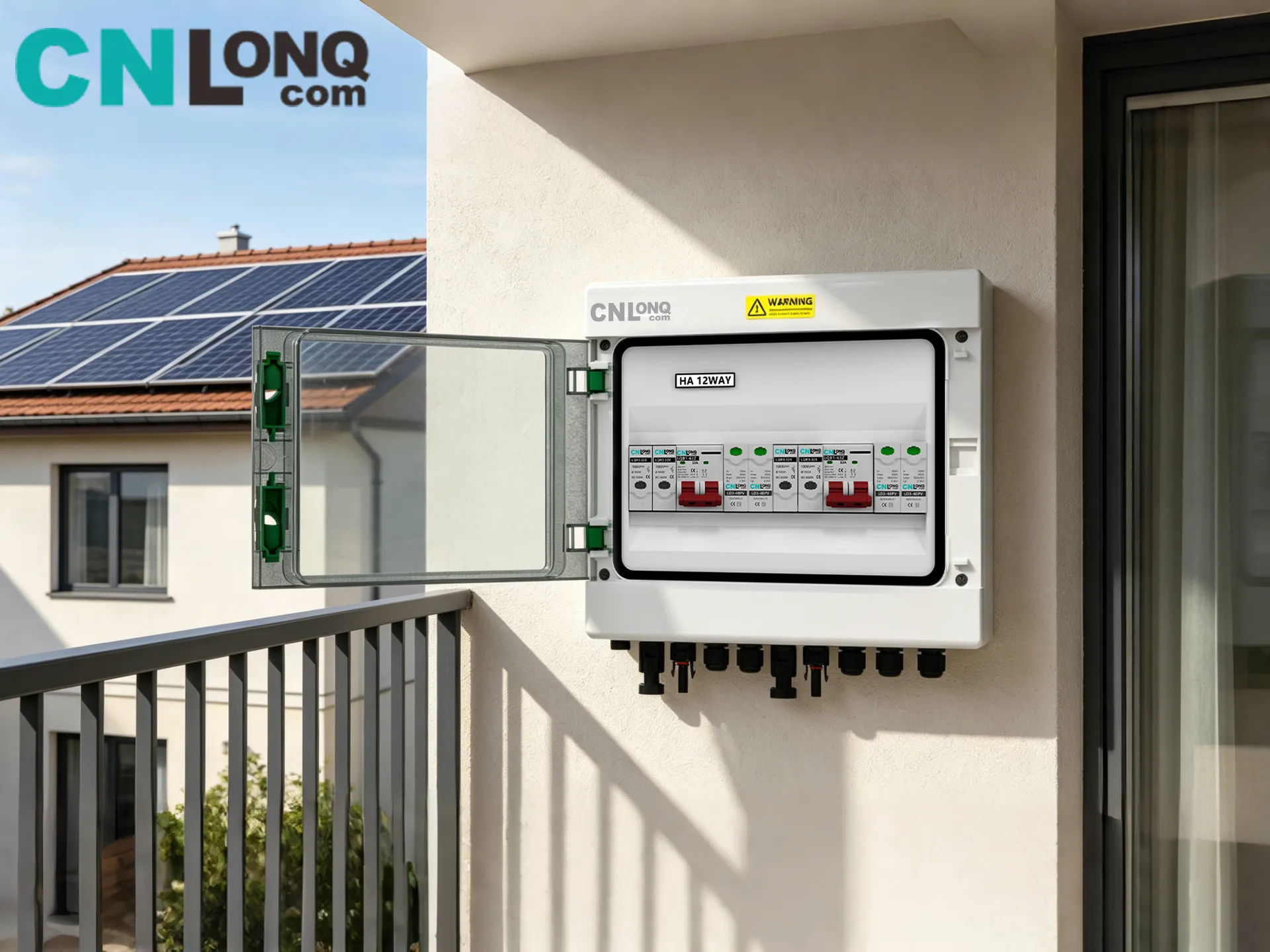
Securely mount the combiner box to a support structure or wall using expansion bolts.
The enclosure should be installed vertically with a tilt angle no greater than 5°.
The recommended mounting height is such that the center of the enclosure is 1.4–1.6 meters above ground for easy access.
Ensure the enclosure's grounding terminal is reliably connected to the system grounding grid (ground resistance ≤ 4Ω).
Step 3: DC Input Wiring (PV String Side)
Before wiring, confirm that all strings are disconnected or are at zero voltage.
Connect the positive cables from each PV string to the corresponding positive input terminals (usually labeled " " or with red terminals).
Connect the negative cables to the corresponding negative input terminals (labeled "-" or with black terminals).
Use a professional crimping tool to ensure secure and tight connections with good contact.
Each input should have its DC fuse installed (confirm fuse ratings in advance).
Step 4: DC Output Wiring (Inverter Side)
Connect the main output positive cable from the combiner box to the positive output terminal.
Connect the main output negative cable to the negative output terminal.
The output cable gauge should be capable of carrying the maximum output current, generally not less than the current rating of the combiner box's main output breaker.
Output cables should be run in conduit to protect against mechanical damage.
Step 5: Surge Protection Grounding
Reliably connect the grounding terminal of the surge protection module (SPD) to the ground busbar inside the combiner box.
Connect the ground busbar to the main system grounding grid using dedicated grounding cables.
Ensure the grounding cable cross-section is at least 16mm² (for copper) or as required by the design.
Step 6: Communication Wiring (if applicable)
If the combiner box has smart monitoring capabilities, connect the communication cables (RS485, Ethernet, etc.) according to the manual.
Run communication cables separately from power cables to avoid interference.
Ground the shield of the communication cable at one end only.
Step 7: Wiring Verification
Use a multimeter to check each input for short circuits or reverse polarity.
Measure the main output terminals to ensure the voltage (positive to negative) is as expected.
Measure the insulation resistance between positive/negative poles and ground; it should be >1MΩ (using a 500V megohmmeter).
Verify that all terminals are tight and secure, with no loose connections.
Step 8: Power-On Test
Close the fuse holders or breakers on each input, one by one.
Use a multimeter to measure the input voltage of each string (should be close to the open-circuit voltage).
Close the main output breaker.
Observe the combiner box's operating status, checking for any abnormal heating or unusual noise.
If monitoring is fitted, confirm that communication is working and data is being uploaded correctly.
Step 9: Labeling and Documentation
Apply clear branch number labels to each input circuit (matching the design drawings).
Record the initial voltage and current values of each input as a baseline for future maintenance.
Post a warning label on the outside of the combiner box: "DANGER: High DC Voltage!"
Step 10: Closing and Acceptance
Close the enclosure door and lock it securely.
Clean the work area and recycle packaging and waste materials.
Complete the installation acceptance record with signatures from all relevant parties.
Summary
Although the PV combiner box is just a "distribution hub" in a power plant, it integrates multiple functions – combining, protection, surge suppression, monitoring, and more – making it a critical node between PV modules and the inverter. Correct selection (voltage matching, adequate current rating, reasonable number of inputs, proper protection) and proper installation (secure wiring, reliable grounding, clear labeling) are the foundations for long-term safe operation of the combiner box. Following this guide will effectively reduce the risk of system faults, improve overall system reliability, and enhance power generation efficiency.
