English
 Español
 Deutsch
 Français
 عربي
عربي
"Blue Ocean" Rises in Northwest China: Exploring the Green Miracle of the Country's Largest PV Power Base
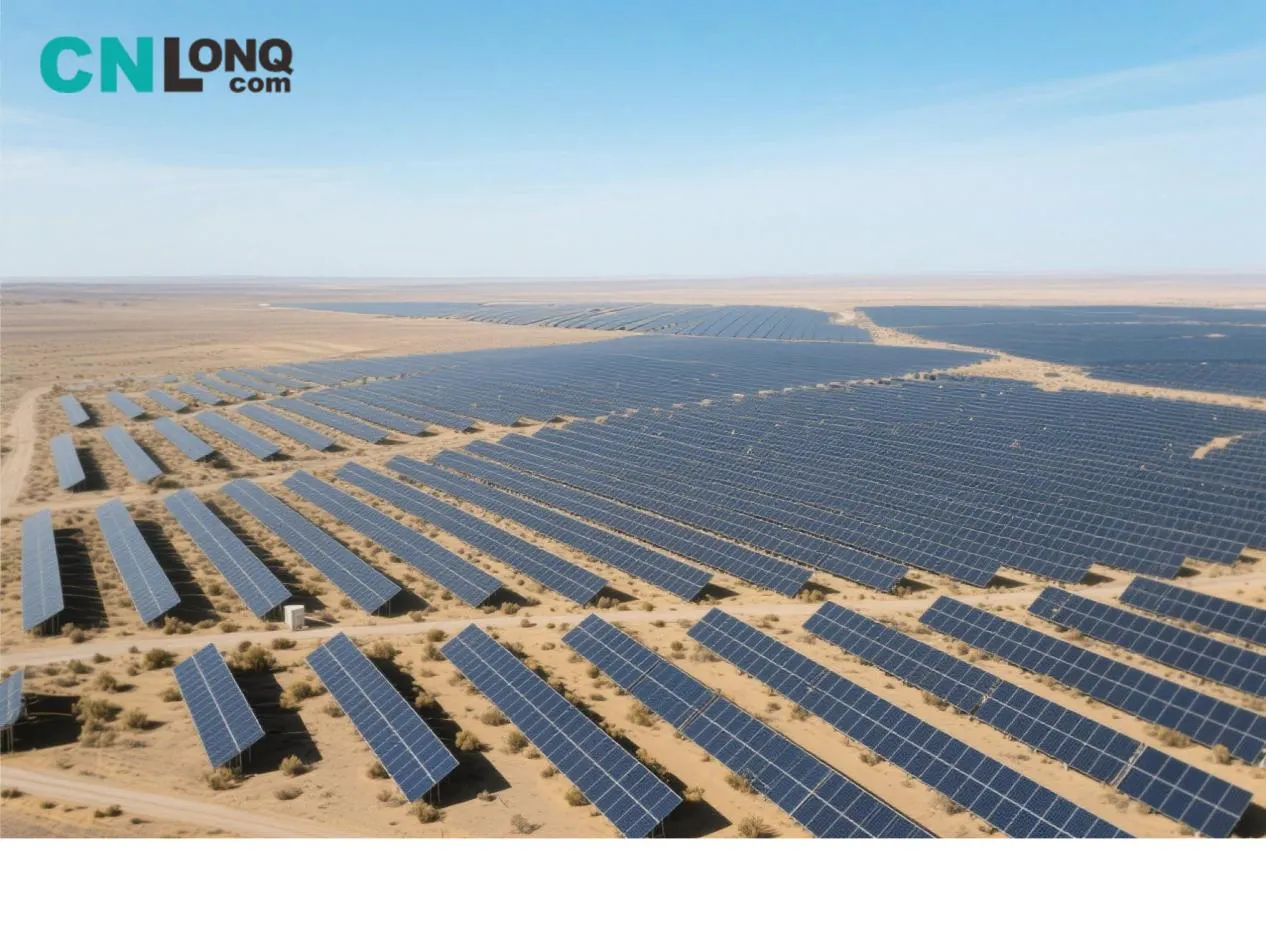
On the vast Gobi Desert of Guazhou County, Jiuquan, Gansu Province, rows of solar panels stretch toward the horizon like waves, forming a spectacular "blue ocean." This mega solar power station, with a total installed capacity of 1.5GW, generates enough electricity annually to meet the needs of 2 million households. Our reporter ventured into the heart of Northwest China’s photovoltaic cluster to uncover how this "barren land" has been transformed into a "green electricity factory."
- Cutting-Edge Technology in a World-Class Solar Array
Smart O&M System
256 inspection drones and 38 cleaning robots deployed
AI fault diagnosis reduces response time to 15 minutes
Huawei’s intelligent IV diagnosis enables module-level health monitoring
Extreme-Environment Adaptations
Specially coated mounting racks withstand winds up to Beaufort scale 12
Bifacial modules installed 1.5m above ground minimize dust accumulation
Self-cleaning coating extends cleaning cycles by 30%
- Dual Benefits: Ecology and Economy
Innovative Desert Management
Drought-resistant crops planted between arrays boost vegetation coverage to 38%
Panel shading reduces ground temperature by 4-6°C, curbing water evaporation
Integrated sheep farming (20,000 heads) creates "power generation above, cultivation between, husbandry below" system
Economic Impact
Annual electricity sales exceed ¥900 million, contributing 15% to local tax revenue
Created 2,000 jobs with average O&M salaries reaching ¥80,000
Each kWh reduces CO2 by 0.85kg; annual carbon offset equals 65,000 hectares of forest
III. "Green Electricity Highway" for West-East Transmission
Ultra-High Voltage Support
±800kV UHVDC project transmits 40B kWh yearly
"PV storage" smoothes output curve, boosting utilization to 98%
Multi-Energy Integration
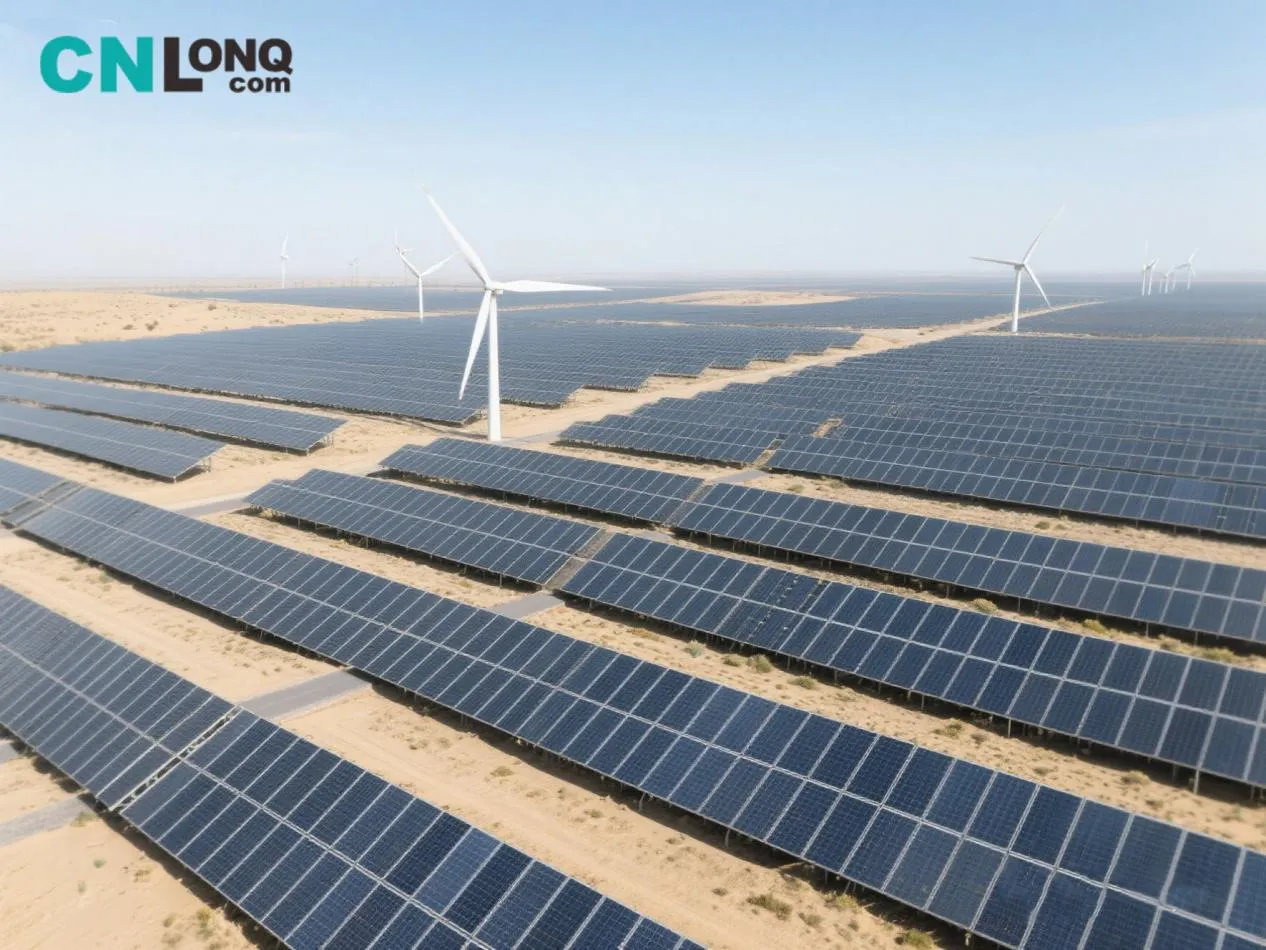
Complements nearby wind farms for balanced generation
200MW/400MWh storage station participates in peak shaving
Pilot hydrogen production project yields 5 tons daily
- Future Challenges & Development
Technical Priorities
Sand-resistant tracking systems
Enhanced low-temperature efficiency
Intelligent cleaning solutions for desert plants
Policy Recommendations
Refining land-use policies for desert PV
Strengthening interprovincial green power consumption mechanisms
Exploring carbon trading-PV revenue linkages
Field Observations
In the control room, a giant screen displays real-time data: daily generation has already reached 8.12 million kWh. Station manager Ma Jianjun explains: "Every module's status is now digitized—like giving the plant a CT scanner."
At dusk, the solar array glows golden under sunset light as cleaning robots glide along tracks. In the distance, new monocrystalline modules are being installed, with 500MW additional capacity planned by year-end.
Industry Perspective
"Northwest PV bases are demonstrating scale advantages," says Li Junfeng, Deputy Director of China Renewable Energy Society. "Through 'mega bases UHV' mode, China's PV costs have fallen below ¥0.25/kWh, offering a global energy transition solution."
Per NEA data, Northwest China's PV generation surged 28% YoY in 2023, accounting for 19% of national total. With the third batch of renewable mega-bases underway, this "blue ocean" continues expanding its green footprint.