English
 Español
 Deutsch
 Français
 عربي
عربي
Indonesia's Million-Scale PV Plan Breaks Ground: Tech Iteration and Localization Reshape Southeast Asia's Industrial Ecosystem
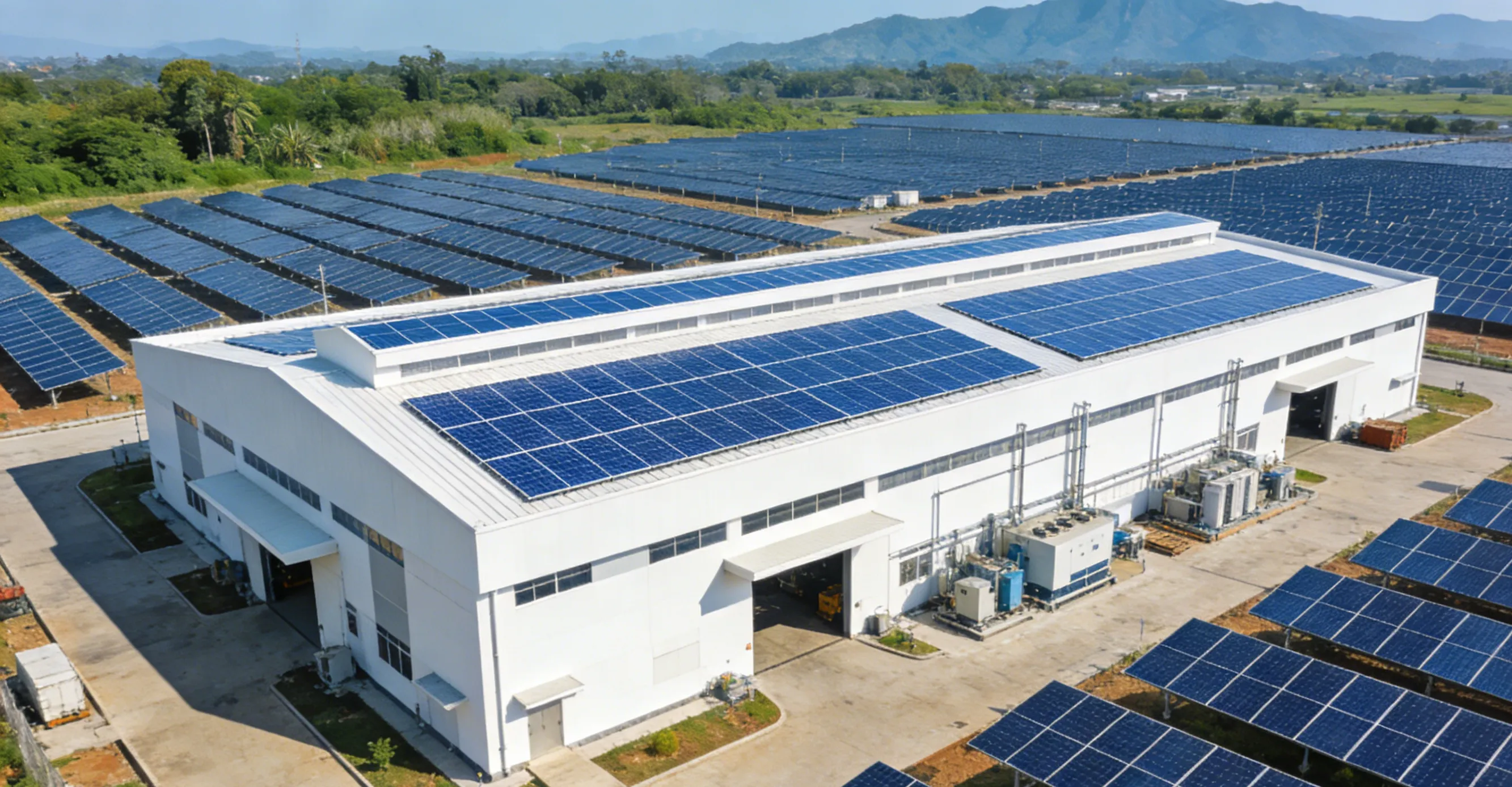
As a core growth market for the global photovoltaic (PV) industry, Southeast Asia is entering a critical window of large-scale expansion. Indonesia's recently advanced "Million-Scale PV Plan" — a blueprint to add 100GW of new PV capacity over the next five years, including 80GW of distributed PV and 20GW of utility-scale PV — not only opens up a multi-trillion-yuan market for global PV enterprises, but also drives the regional PV industry's transformation from "import dependence" to "localized synergy" through the dual impetus of policy guidance and market demand. LONGi Green Energy Technology, a leading Chinese PV enterprise, has launched a 1.6GW high-efficiency module manufacturing base in West Java, Indonesia, equipped with its self-developed HPBC high-efficiency cell technology. This stands as a typical practice of industry leaders adapting technologies, deploying production capacity, and extending industrial chains based on regional market characteristics, providing a valuable model for global PV companies to deepen their presence in emerging markets.
From an industrial development perspective, the advancement of Indonesia's Million-Scale PV Plan is essentially an inevitable result of the convergence between emerging markets' energy transition needs and the maturity and cost-effectiveness of PV technology. Currently, the global PV industry has entered a mature stage characterized by "cost reduction through technological iteration and efficiency improvement through large-scale deployment". As Southeast Asia's largest economy, Indonesia's pain points in energy structure transformation are highly aligned with the characteristics of the PV industry. Data shows that fossil fuels account for as high as 86.4% of Indonesia's total installed power capacity, with coal-fired power generation contributing over 54%. Driven by both environmental pressures and power supply gaps, PV has emerged as the optimal solution. On one hand, the current average cost of PV power generation is 41% lower than that of fossil fuel-based power, and when combined with Indonesia's abundant solar resources near the equator, it boasts inherent economic advantages. On the other hand, as an archipelagic nation consisting of 17,506 islands, Indonesia faces high costs in extending traditional large power grids. The distributed PV energy storage microgrid model is perfectly suited to meet the power supply needs of such an archipelagic country, which explains why 80% of the capacity in the plan is allocated to distributed scenarios.
For the PV industry, the core value of the Indonesian market lies not only in its scale growth, but also in the new requirements it places on technological adaptability and scenario diversification, which have become a litmus test for enterprises' core competitiveness. In terms of scenario characteristics, Indonesia's distributed PV mainly focuses on rural microgrids and commercial-industrial rooftops, facing complex operating conditions such as high temperature, high humidity, and heavy dust in some areas. At the same time, there are higher requirements for the power generation efficiency, reliability, and adaptability of modules. LONGi Green Energy's decision to equip its Indonesian base with HPBC (Hybrid Passivated Back Contact) high-efficiency cell technology is a prime example of precise alignment with regional scenario needs. As one of the mainstream high-efficiency technologies in the current PV industry, HPBC technology not only leads in conversion efficiency (up to 24.43% at maximum), but also has significant advantages in low-light power generation, high-temperature stability, and anti-cracking performance. It is particularly suitable for scenarios in remote rural areas of Indonesia with uneven lighting and limited space on commercial-industrial rooftops. More notably, the iterative upgrading of HPBC technology (the efficiency of the second-generation technology has exceeded 26.5%) is leading the industry's transformation from "price competition" to "value competition". The large-scale application in the Indonesian market will further accelerate the industrialization and cost reduction of high-efficiency technologies, forming a positive industrial cycle of "technological adaptation - scenario application - large-scale cost reduction".
Localization layout is a core prerequisite for PV enterprises to deepen their roots in the Indonesian market and a key driver for improving the regional industrial chain ecosystem. Previously, Indonesia's PV industrial chain was underdeveloped, with local module supporting rate of less than 15% and approximately 90% of modules relying on imports. Although the Indonesian government lowered the TKDN (Domestic Component Level) threshold for PV power plants from 40% to 20%, the lack of core production capacity and technology remained a major bottleneck for industrial development. The launch of LONGi Green Energy's 1.6GW module base is not a simple transfer of production capacity, but a strategic layout deeply integrated into the local industrial chain. By cooperating with a subsidiary of Indonesia's state-owned electricity company (PLN), the project can not only quickly connect with local project resources, but also meet TKDN policy requirements through localized production. At the same time, it will create local jobs, cultivate professional PV talents, and fill the gap in local high-efficiency module production capacity. This localization model integrating "technology production capacity talents" can not only reduce enterprises' logistics costs and policy risks, but also promote the formation of a primary industrial chain cluster covering "manufacturing - installation - operation and maintenance" in Indonesia. This is also the core logic for the sustainable development of the PV industry in emerging markets.
From the perspective of the global PV industrial pattern, the advancement of Indonesia's Million-Scale PV Plan is becoming a key variable reshaping the competitive landscape of the Southeast Asian PV market. Currently, global PV production capacity is showing a trend of shifting to emerging markets. ASEAN countries such as Malaysia and Thailand are accelerating their PV layouts. With its huge market scale, superior resource conditions, and continuously optimized policy environment, Indonesia has become a must-win market for global PV enterprises. In addition to LONGi Green Energy, other Chinese PV companies such as Trina Solar have also deployed production capacity in Indonesia. China's PV technological accumulation, production capacity advantages, and project experience are highly compatible with Indonesia's energy needs. It is worth noting that competition in the Indonesian market is no longer solely based on product prices, but on a comprehensive competition of technological adaptability, localized service capabilities, and industrial chain synergy. For example, the Asian Infrastructure Investment Bank (AIIB) recently approved a US$21 million loan for the 100MW Pasuruan PV project in Indonesia. The procurement of core equipment and technical support for the project tend to favor enterprises with localized service capabilities, which confirms the transformation of industry competition logic.
Of course, the large-scale development of the PV industry in the Indonesian market still faces multiple challenges, which require joint efforts between industry enterprises and the local government to overcome. From an industrial perspective, the core challenges focus on three aspects: first, the lag in power grid supporting upgrades. Indonesia's current clean energy absorption capacity is limited, and the stability of power grids in some remote areas is insufficient, which may affect the full absorption and revenue of PV projects. Second, the dependence on imports for core technologies. Although local production capacity is gradually being deployed, inverters, core materials, and other key components still rely on overseas supply, posing risks to supply chain stability. Third, increasingly fierce regional competition. Countries such as Malaysia and Thailand are competing for investment through more targeted subsidy policies. Indonesia needs to form differentiated advantages in policy continuity and industrial chain supporting. In response, PV enterprises need to use technological innovation to address scenario pain points, reduce policy and supply chain risks through in-depth localization layouts, and promote multilateral cooperation to improve power grid and financial supporting facilities. This is also the core path for the long-term development of the industry in emerging markets.
Overall, the advancement of Indonesia's Million-Scale PV Plan not only provides a new growth engine for the global PV industry, but also drives the industry into a new stage of "technological adaptation to scenarios, production capacity embedded in localization, and ecological collaborative development". LONGi Green Energy's localized layout and application of high-efficiency technologies have set a clear model for the industry — in emerging markets, only by accurately matching scenario needs, deeply participating in local industrial chain construction, and building core competitiveness through technological innovation can enterprises gain an advantage in market competition. With the entry of more PV enterprises and the improvement of the industrial chain, Indonesia is expected to transform from a major PV importer to a Southeast Asian PV industry hub. This process will further promote the technological iteration and pattern optimization of the global PV industry, injecting sustained momentum into global energy transition.